Last Updated: 31 January, 2026
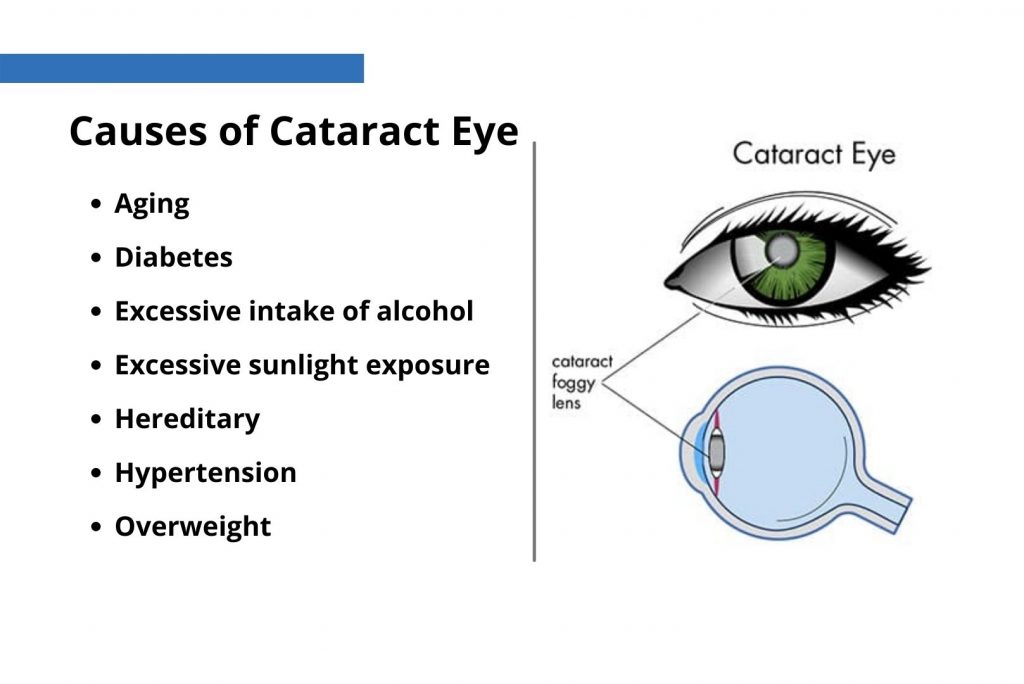
Cataracts are a common eye condition, where the eye’s crystalline lens becomes hazy or cloudy and consequently impairs vision. In this article, we will explore the most common causes of cataracts.
1. Age-related cataracts
As we age, the proteins inside the natural lens of the eye gradually break down and clump together. This process happens naturally in everyone and slowly makes the lens cloudy. Age-related cataracts are the most common type and typically begin to appear after the age of 50, although symptoms may not be noticeable until later.
2. Diabetes and other general health problems
People with diabetes have higher sugar levels in the blood, and this excess sugar can enter the lens, causing it to swell and become cloudy. Diabetics also produce sorbitol inside the lens, which accelerates cataract formation. Other health conditions, such as hypertension or metabolic disorders, may also increase cataract risk.
3. Smoking
Chemicals in cigarette smoke create oxidative stress, which damages the proteins and fibres of the lens. This speeds up the clouding process. Smokers are significantly more likely to develop cataracts earlier in life compared to non-smokers.
4. Family history of cataracts
Genetic factors play an important role. If close family members such as parents or siblings have had cataracts at a younger age, your risk increases. Some people inherit weaker lens structures or a higher tendency for protein degradation.
5. Previous eye injuries, surgeries, or radiation exposure
A direct trauma to the eye—such as a blow, penetrating injury, or chemical burn—can disrupt the lens fibres and lead to a traumatic cataract.
Similarly, previous eye surgeries or radiation treatment around the head and neck can cause lens changes that lead to clouding years later.
6. Long-term use of steroid medications
Extended use of steroids—whether as tablets, creams, inhalers, or eye drops—can alter how the lens processes proteins. Steroid-induced cataracts often form at the back of the lens (posterior subcapsular cataracts) and may develop more rapidly than age-related ones.
7. Excessive sun exposure (UV Radiation)
Ultraviolet (UV) rays from the sun accelerate oxidative damage inside the eye. People who spend long hours outdoors without UV protection—such as farmers, drivers, or athletes—have a higher chance of developing cataracts earlier.
8. Hormone Replacement Therapy (HRT)
Some studies suggest that long-term use of hormone replacement therapy may slightly increase the risk of cataracts. Hormonal changes can affect lens metabolism and transparency.
9. High myopia (severe short-sightedness)
People with high myopia often have elongated eyeballs and stretched internal eye structures. This makes the lens more vulnerable to degeneration and early cataract formation. They may also be more prone to other eye issues that indirectly increase the risk of developing a cataract.
10. Genetic disorders
Certain genetic conditions—such as congenital metabolic disorders or inherited syndromes—can disrupt normal lens development, leading to cataracts in infants, children, or young adults. These cataracts may appear early and often require timely treatment.
11. Other eye conditions
Conditions such as uveitis (inflammation inside the eye), glaucoma, or retinal diseases can cause biochemical changes in the lens. Chronic inflammation, long-term medication use, or altered eye pressure can speed up cataract development.
Author Bio
Dr Parth Shah is a leading ophthalmologist in Canberra, specialising in cataract surgery. With extensive training and experience, he is renowned for his expertise in the field. Dr Shah is dedicated not only to performing successful surgeries but also to patient education. His compassionate approach, combined with technical proficiency, has earned him the trust and gratitude of countless patients. He is a true advocate for eye health and a trusted name in the Canberra ophthalmology community.