Table of Contents
ToggleLast Updated: 17 June, 2026
Myopia (short-sightedness) is becoming increasingly common among children worldwide — and Australia is no exception. What was once a relatively minor vision issue is now recognised as a growing public health concern, especially as cases appear earlier and progress more rapidly.
The good news? Modern research and treatment options mean that myopia can now be actively managed — not just corrected.
Here is what Australian parents need to know in 2026.
Why is myopia rising in children?
Over the past two decades, the prevalence of myopia has increased significantly. The main reasons include:
- Increased screen time and near work.
- Reduced outdoor activity.
- Earlier exposure to digital devices.
- Academic and lifestyle changes.
Children today are spending more time indoors focusing on close-up tasks, which plays a major role in the development and progression of myopia.
Why is myopia control important?
Myopia is not just about needing glasses.
Higher levels of myopia are associated with an increased risk of serious eye conditions later in life, including:
This is why early intervention is crucial — slowing progression in childhood can significantly reduce long-term risks.
How does myopia progress in children?
Myopia typically develops between the ages of 6 and 12 and progresses as the child grows.
Key signs parents should watch for include:
- Squinting to see distant objects.
- Sitting very close to screens or the television.
- Difficulty seeing the board at school.
- Frequent headaches or eye strain.
If left unmanaged, myopia can worsen rapidly during school years.
What does myopia control mean?
Myopia control refers to treatments that slow down the progression of short-sightedness, rather than simply correcting vision with standard glasses.
This is a major shift in modern eye care — from passive correction to active management.
Evidence-based myopia control options in 2026
1. Low-dose atropine eye drops
These prescription eye drops are used at night and have been shown to significantly slow myopia progression.
Key points:
- Safe and widely used in children.
- Minimal side effects at low doses.
- Requires ongoing monitoring by an eye specialist.
2. Specialised myopia control lenses
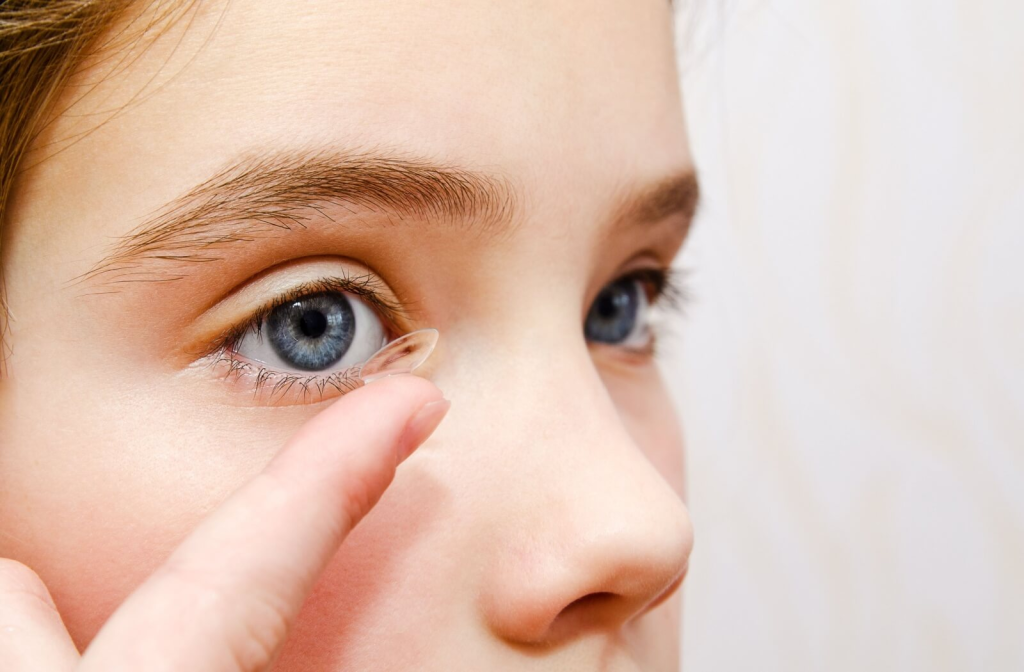
These include:
- Myopia control spectacles.
- Soft contact lenses designed to slow eye growth.
They work by altering how light focuses on the retina, helping reduce progression.
3. Orthokeratology (Ortho-K)
These are specially designed hard contact lenses worn overnight to reshape the cornea temporarily.
Benefits:
- Clear vision during the day without glasses.
- Can slow myopia progression.
Considerations:
- Requires strict hygiene and supervision.
- Not suitable for all children.
4. Increasing outdoor time
One of the simplest and most effective strategies.
Research shows that:
- At least 2 hours of outdoor time daily can reduce the risk of developing and worsening myopia.
Natural light plays a protective role in eye development.
What works best? A combined approach
In many cases, the best outcomes come from combining treatments, such as:
- Low-dose atropine + increased outdoor time.
- Specialised lenses + screen habit changes.
Your eye specialist will tailor a plan based on your child’s age, lifestyle, and rate of progression.
Screen time and myopia: what parents should know
While screens do not directly “cause” myopia, excessive near work contributes to its progression.
Practical tips:
- Encourage regular breaks. (20-20-20 rule)
- Maintain proper viewing distance.
- Limit prolonged, uninterrupted screen use.
When should you consider myopia control?
Early intervention is key.
You should consider myopia control if:
- Your child has recently been diagnosed with myopia.
- Their prescription is increasing each year.
- There is a family history of high myopia.
The earlier treatment begins, the more effective it tends to be.
The role of regular eye examinations
Routine eye exams are essential to:
- Detect myopia early.
- Track progression.
- Adjust treatment as needed.
For school-aged children, annual eye checks are strongly recommended.
What should Australian parents do in 2026?
To protect your child’s vision:
- Encourage at least 2 hours of outdoor activity daily.
- Manage screen time and promote healthy visual habits.
- Watch for early signs of vision problems.
- Schedule regular eye examinations.
- Discuss myopia control options early with an eye specialist.
Conclusion
Myopia is no longer just about wearing glasses — it is a progressive condition that needs timely attention. With the right combination of modern treatments and healthy lifestyle habits, parents can effectively slow its progression and protect their child’s long-term vision.
Early action makes all the difference. Regular eye check-ups and proper guidance can help prevent future complications and ensure the best outcomes.
If you are concerned about your child’s eyesight, Consult Dr. Parth Shah for expert advice and personalised care.
Author Bio
Dr Parth Shah is a leading ophthalmologist in Canberra, with a special interest in paediatric eye surgery. With extensive training and experience, he is renowned for his expertise in the field. Dr Shah is dedicated not only to performing successful surgeries but also to patient education. His compassionate approach, combined with technical proficiency, has earned him the trust and gratitude of countless patients. He is a true advocate for eye health and a trusted name in the Canberra ophthalmology community.