
Last Updated: 26 February, 2026
Rare congenital eye disorders are conditions that affect a child’s eyes from birth or early infancy. Although individually uncommon, these disorders can have a significant impact on visual development, learning, and overall quality of life if not recognised and managed early. Some conditions may be visible at birth, while others become apparent only as a child grows and visual demands increase.
Early diagnosis, timely intervention, and ongoing monitoring play a crucial role in preserving vision and supporting normal visual development. Below, we explore key aspects of rare congenital eye disorders in children in a clear, parent-friendly manner.
What are congenital eye disorders?
Congenital eye disorders are abnormalities of the eye or visual system that are present from birth. They may affect the structure of the eye, the clarity of vision, eye movement, or the connection between the eye and the brain.
These conditions can arise due to genetic factors, developmental issues during pregnancy, infections, or unknown causes. While some disorders are isolated to the eyes, others may be part of a broader genetic or systemic condition.
Common types of rare congenital eye disorders
Although rare, some congenital eye conditions that ophthalmologists encounter include:
- Congenital cataract
Clouding of the eye’s natural lens present at birth, which can block visual input and interfere with normal visual development. - Congenital glaucoma
Increased eye pressure due to abnormal drainage structures, leading to enlarged eyes, light sensitivity, and potential optic nerve damage. - Aniridia
Partial or complete absence of the iris, often associated with reduced vision, light sensitivity, and other ocular complications. - Coloboma
A gap or defect in structures of the eye such as the iris, retina, or optic nerve, caused by incomplete eye development. - Microphthalmia and anophthalmia
Conditions where one or both eyes are abnormally small or absent, affecting vision and facial development. - Congenital ptosis
Drooping of the upper eyelid present from birth, which may obstruct vision if severe.
Signs and symptoms parents should watch for
Early signs of congenital eye disorders may be subtle. Parents and caregivers should seek medical advice if they notice:
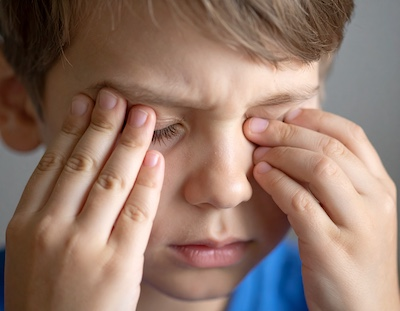
- White or cloudy appearance in the pupil.
- Excessive tearing or light sensitivity.
- Eyes that appear unusually large, small, or misaligned.
- Poor eye contact or lack of visual tracking.
- Drooping eyelids covering part of the pupil.
- Delayed visual milestones compared to age expectations.
Routine eye screening and paediatric check-ups are essential, even when symptoms are not obvious.
How do congenital eye disorders affect visual development?
Clear and balanced visual input during infancy and early childhood is critical for normal brain development. Congenital eye disorders can disrupt this process, leading to:
- Amblyopia (lazy eye) due to unequal or reduced vision.
- Delayed visual maturation.
- Permanent vision impairment if treatment is delayed.
The earlier a condition is detected and treated, the better the chances of preserving useful vision.
Diagnosis and evaluation
Diagnosing rare congenital eye disorders often involves a detailed eye examination by a paediatric ophthalmologist. Depending on the condition, assessment may include:
- Specialised imaging tests.
- Measurement of eye pressure.
- Genetic testing or counselling.
- Coordination with paediatricians or other specialists.
Comprehensive evaluation helps guide appropriate treatment and long-term care.
Treatment and management options
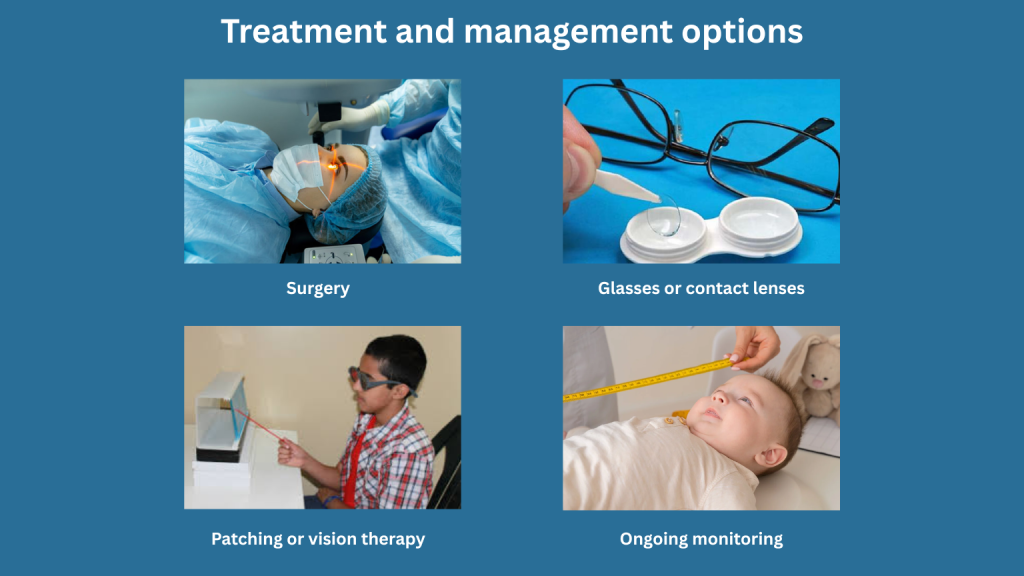
Management depends on the specific condition, its severity, and the child’s age. Treatment may include:
- Surgery to remove cataracts, reduce eye pressure, or correct structural abnormalities.
- Glasses or contact lenses to optimise visual clarity.
- Patching or vision therapy to support visual development.
- Ongoing monitoring to detect changes as the child grows.
Many children require long-term follow-up to ensure optimal visual outcomes.
When should a child see an eye specialist?
A child should be evaluated by an ophthalmologist if:
- An eye abnormality is noted at birth.
- Vision-related developmental delays are suspected.
- There is a family history of congenital eye disorders.
- The child fails routine vision screening tests.
Early referral can make a significant difference in long-term vision and quality of life.
Conclusion
Rare congenital eye disorders in children may be uncommon, but their impact can be profound if not addressed early. Awareness of warning signs, timely diagnosis, and appropriate treatment are key to protecting a child’s vision and supporting healthy visual development.
If you have concerns about your child’s eyes or vision, early assessment by an experienced ophthalmologist can provide clarity, reassurance, and a tailored care plan for the best possible outcome. Book a consultation with Dr Parth Shah, a leading paediatric ophthalmologist in Canberra, to ensure your child receives expert evaluation and personalised care.
Author bio
Dr Parth Shah is a leading ophthalmologist in Canberra, with a special interest in paediatric eye surgery. With extensive training and experience, he is renowned for his expertise in the field. Dr Parth Shah is dedicated not only to performing successful surgeries but also to patient education. His compassionate approach, combined with technical proficiency, has earned him the trust and gratitude of countless patients. He is a true advocate for eye health and a trusted name in the Canberra ophthalmology community.