
Last Updated: 27 March, 2026
A chalazion is a common eyelid condition that can cause a persistent lump, swelling and cosmetic concern. While many chalazia resolve with simple treatments such as warm compresses, some do not improve and require minor surgical removal.
If you have been advised to consider surgery, understanding the procedure and recovery process can help you feel informed and reassured.
What is a chalazion?
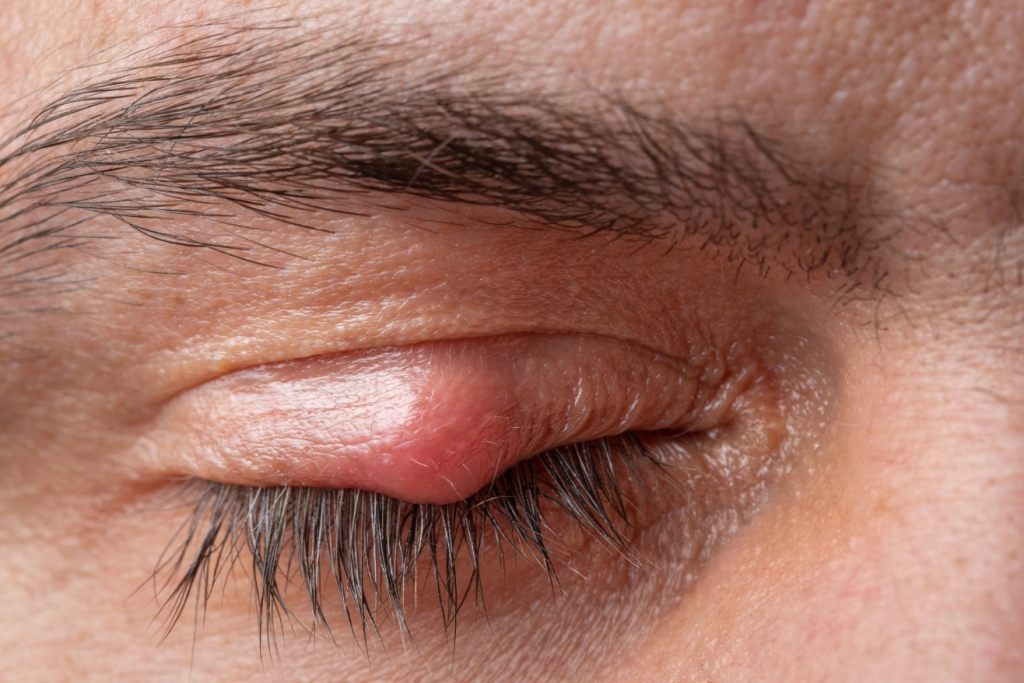
A chalazion is a firm, painless lump that develops on the upper or lower eyelid due to blockage of a meibomian gland. These glands produce oil that forms part of your tear film. When the gland becomes blocked, the oil builds up inside the eyelid and causes inflammation.
Unlike a stye, a chalazion is usually not caused by active infection and tends to grow slowly over days or weeks.
Common symptoms include:
- A small, firm lump in the eyelid.
- Localised swelling.
- A feeling of heaviness in the lid.
- Mild tenderness. (usually early on)
- Blurred vision if the lump presses against the eye.
- Cosmetic concerns.
Chalazia are common in adults and children and are more likely to occur in people with blepharitis, rosacea or oily skin.
When is chalazion surgery recommended?
Most chalazia improve within several weeks with conservative treatment. However, surgery may be recommended if:
- The lump persists for more than 4–6 weeks.
- It continues to enlarge.
- It affects your vision.
- It causes ongoing discomfort.
- It recurs in the same location.
- The diagnosis is uncertain.
In some cases, particularly in adults with recurrent chalazia in the same spot, further evaluation may be required to rule out other eyelid conditions.
An assessment by an experienced ophthalmologist ensures the correct diagnosis and management plan.
Preparing for chalazion removal
Chalazion removal is usually performed as a day procedure under local anaesthetic. Preparation is minimal.
Before surgery:
- You will have an examination of your eyelid and eye.
- Your medical history will be reviewed.
- You may be asked about blood thinners or other medications.
- Consent for the procedure will be obtained.
In most cases, you can eat and drink normally beforehand unless advised otherwise.
Procedure for chalazion removal
Chalazion surgery is a minor and relatively quick procedure, typically taking 15 to 20 minutes.
Step 1: Local anaesthetic
A small injection of local anaesthetic is given into the eyelid to completely numb the area. You may feel brief pressure or stinging, but the discomfort settles quickly.
Step 2: Eyelid positioning
A specialised clamp is placed on the eyelid to stabilise it and reduce bleeding. The eyelid is gently turned inside out so the incision can be made from the inner surface. This avoids a visible scar on the outside skin in most cases.
Step 3: Incision and curettage
A small incision is made on the inner eyelid surface. The contents of the chalazion are carefully drained, and the inflamed tissue is curetted (scraped out) to reduce the risk of recurrence.
Step 4: Completion
The incision is usually small enough that stitches are not required. Gentle pressure is applied to minimise bleeding, and antibiotic ointment is placed in the eye.
You will be able to go home shortly after the procedure.
What to expect immediately after surgery?
It is normal to experience:
- Mild swelling.
- Bruising around the eyelid.
- Slight tenderness.
- Temporary blurred vision due to ointment.
A light eye pad may be placed for a few hours. Most patients can remove it later the same day.
Pain is usually minimal and can be managed with simple pain relief such as paracetamol, if required.
Recovery timeline
Recovery is generally quick and straightforward.
First 24–48 hours
- Swelling and mild bruising are common.
- Use prescribed antibiotic ointment as directed.
- Apply cold compresses gently to reduce swelling.
- Avoid rubbing or touching the eye.
Days 3–7
- Swelling gradually reduces.
- Bruising begins to fade.
- Most patients return to work and normal activities within 1–2 days.
- Avoid heavy exercise for several days.
Weeks 2–3
- Eyelid appearance usually returns to normal.
- Any residual firmness typically softens.
- Follow-up review may be scheduled if needed.
Risks and potential complications
Chalazion removal is considered a very safe procedure. However, as with any surgical treatment, small risks exist.
These may include:
- Infection
- Bleeding or bruising.
- Recurrence of the chalazion.
- Minor scarring. (rare)
- Damage to nearby structures. (very rare)
Choosing a qualified ophthalmologist reduces these risks and ensures appropriate management if concerns arise.
How to reduce the risk of recurrence?
Some individuals are prone to recurrent chalazia. Preventative strategies include:
- Regular warm compresses.
- Gentle eyelid massage.
- Daily eyelid hygiene. (using lid wipes or diluted baby shampoo)
- Managing blepharitis.
- Treating associated rosacea.
- Reducing heavy or expired eye makeup use.
Your ophthalmologist may recommend a personalised eyelid care routine.
When to seek medical advice after surgery?
Contact your eye specialist if you experience:
- Increasing redness or pain.
- Significant swelling.
- Discharge from the eye.
- Sudden changes in vision.
- Fever.
Prompt review ensures early treatment if complications develop.
Conclusion
Chalazion removal surgery is a safe and effective solution for persistent or bothersome eyelid lumps that do not improve with conservative care. The procedure is quick, performed under local anaesthetic, and recovery is typically smooth with minimal downtime.
If you are dealing with a recurring or long-standing chalazion and would like expert assessment, consult Dr Parth Shah, an experienced ophthalmologist providing comprehensive eye care in Australia.
Early diagnosis and tailored treatment can restore comfort, improve eyelid appearance and reduce the risk of recurrence. Book a consultation today to receive personalised advice and professional care.
Author bio
Dr. Parth Shah is a leading ophthalmologist in Canberra, Australia. With extensive training and experience, he is renowned for his expertise in the field. Dr. Shah is dedicated not only to performing successful surgeries but also to patient education. His compassionate approach, combined with technical proficiency, has earned him the trust and gratitude of countless patients. He is a true advocate for eye health and a trusted name in the Canberra ophthalmology community.