Table of Contents
ToggleLast Updated: 13 May, 2026
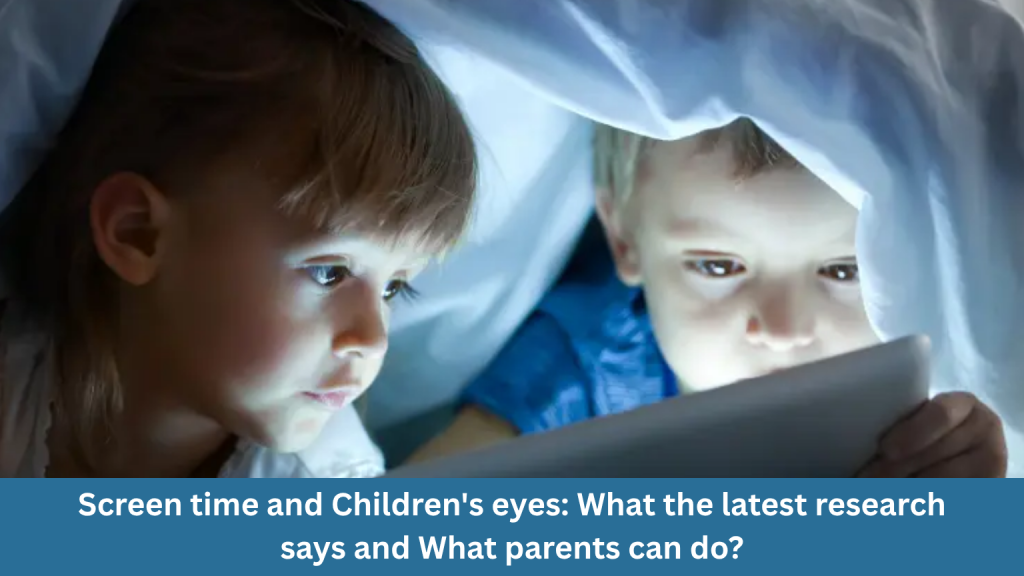
Digital screens are now part of everyday childhood — from online learning and homework to gaming and social media. While technology offers many benefits, growing research shows that excessive screen time may be affecting children’s eye health in ways parents should understand.
So what does the latest evidence actually say — and how concerned should you be?
Why does screen time matter more than ever?
Children today are spending more time indoors and on devices than any previous generation. This shift has raised concerns among eye care professionals, particularly around the rising rates of myopia (short-sightedness).
Recent large-scale research suggests that each additional hour of daily screen time can significantly increase the risk of myopia and its progression. In fact, this literature showed the myopia risk increased significantly between 1-4 hours of daily screen time, and then rose more gradually after 4 hours.
But screen time itself is not the only issue — it is what it replaces.
The real problem: less outdoor time
One of the strongest findings in modern eye research is this:
Time spent outdoors protects children’s vision.
Natural light plays a crucial role in healthy eye development. Studies show that at least two hours of outdoor activity daily can reduce the risk of developing myopia.
When screen time replaces outdoor play, children lose this protective effect — which may explain the global rise in childhood short-sightedness.
What does screen time actually do to the eyes?
1. Digital eye strain
Prolonged screen use can lead to:
- Tired or sore eyes.
- Headaches.
- Blurred vision.
This happens because children tend to focus intensely on close objects for long periods, which strains the eye muscles.
2. Dry eyes and reduced blinking
When using screens, children blink significantly less, leading to:
- Dryness
- Irritation
- Burning sensation.
Reduced blinking can disrupt the eye’s natural tear film, causing discomfort.
3. Increased risk of myopia
Excessive near work — including screens, reading, or tablets — is linked to faster progression of short-sightedness, especially when combined with low outdoor exposure.
4. Sleep disruption (indirect eye impact)
Screens emit blue light, which can:
- Delay melatonin release.
- Disrupt sleep cycles.
Poor sleep can worsen eye fatigue and overall wellbeing.
What about blue light — is it dangerous?
This is one of the most common concerns among parents.
Current evidence suggests:
- Blue light from screens does not directly cause permanent eye damage.
- However, it can contribute to eye strain and poor sleep, especially at night.
So while blue light is not the main culprit, managing screen habits still matters.
Practical, evidence-based tips for parents
The good news? Small changes can make a big difference.
1. Follow the 20-20-20 rule
Encourage your child to:
- Look away every 20 minutes.
- Focus on something 20 feet (or 6 metres) away.
- For at least 20 seconds.
This helps relax eye muscles and reduce strain.
2. Prioritise outdoor play
Aim for:
- At least 2 hours outdoors daily.
This is one of the most effective ways to protect against myopia.
3. Set healthy screen limits
While exact limits vary by age:
- Avoid excessive continuous screen use.
- Break up long sessions.
- Keep screens out of bedrooms at night.
4. Maintain proper viewing habits
Make sure your child:
- Holds screens at least 30–40 cm away.
- Avoids using devices lying down.
- Uses screens at eye level.
5. Reduce screen time before bed
- Stop screens at least 1 hour before sleep.
- This supports better sleep and reduces eye fatigue.
6. Encourage regular blinking
A simple reminder to “blink more” can help prevent dryness — especially during gaming or study sessions.
7. Schedule regular eye checks
Children should have:
- Eye exams every 1–2 years, or sooner if symptoms appear.
Early detection is key to managing vision problems effectively.
When should parents be concerned?
Book an eye examination if your child:
- Squints or sits very close to screens.
- Complaints of headaches or eye pain.
- Has trouble seeing the board at school.
Conclusion
Screen time is an unavoidable part of modern childhood, but its impact on eye health depends on how it is managed. The latest research clearly shows that excessive screen use — especially when combined with reduced outdoor activity — can increase the risk of myopia, eye strain, and long-term visual issues.
The key is balance. By encouraging outdoor play, setting healthy screen boundaries, and prioritising regular eye check-ups, parents can take simple yet effective steps to safeguard their child’s vision. Book a consultation today and take the first step towards protecting your child’s future vision.
Author Bio
Dr Parth Shah is a leading ophthalmologist in Canberra, with a special interest in paediatric eye surgery. With extensive training and experience, he is renowned for his expertise in the field. Dr Shah is dedicated not only to performing successful surgeries but also to patient education. His compassionate approach, combined with technical proficiency, has earned him the trust and gratitude of countless patients. He is a true advocate for eye health and a trusted name in the Canberra ophthalmology community.