Last Updated: 13 October, 2025
Cataract surgery is one of the most successful and frequently performed eye procedures in world.
Each year, millions of Australians undergo this operation to restore their vision and improve quality of life. The surgery involves removing the cloudy lens from the eye and replacing it with a clear artificial intraocular lens (IOL).
One of the most common questions patients ask after their surgery is: “Will my cataracts come back?”
The simple answer is: No, cataracts cannot return once removed. But in some cases, people may experience cloudy vision again after surgery, which can be mistaken for cataracts growing back. Let us explore why this happens, what it means, and how it can be treated.
What are cataracts?
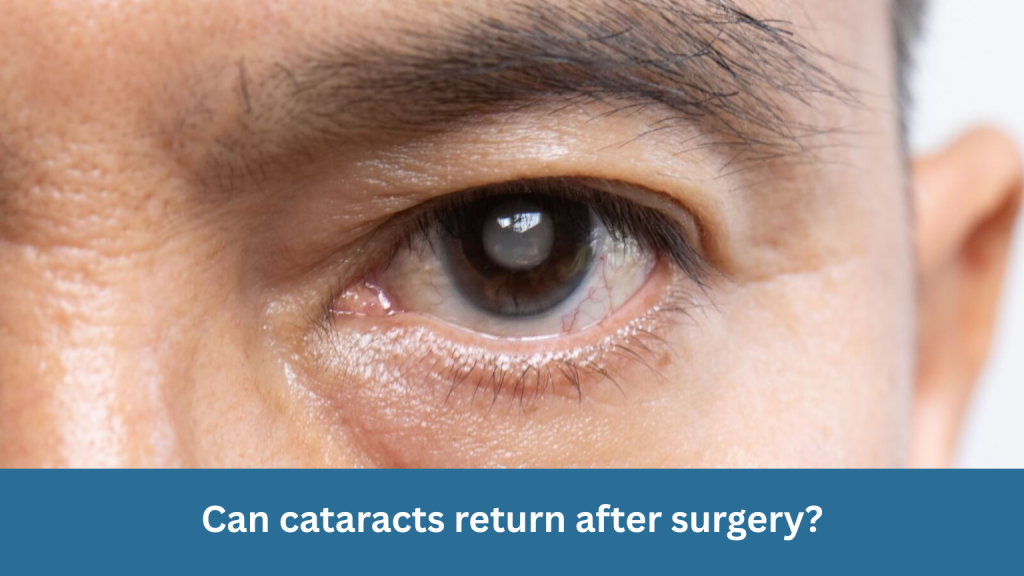
A cataract is the clouding of the natural lens inside the eye. Normally, the lens focuses light onto the retina, allowing us to see clearly. With age or certain risk factors, the proteins in the lens can clump together, making the lens cloudy. This cloudiness reduces clarity of vision and can make daily activities—like reading, driving, or recognising faces—difficult.
Common symptoms of cataracts include:
- Blurred or cloudy vision.
- Sensitivity to bright light and glare.
- Colours appearing faded or yellowed.
- Needing brighter light for reading.
- Difficulty driving at night.
Cataracts usually develop slowly and are very common in people over the age of 60.
How does cataract surgery work?
Cataract surgery is performed by an ophthalmologist and usually takes less than 30 minutes. It is a safe and highly effective procedure.
During the surgery:
- The cloudy natural lens is removed through a tiny incision.
- An artificial intraocular lens (IOL) is implanted in its place.
- The incision is self-sealing, meaning stitches are usually not needed.
Since the cataract-affected lens is permanently removed, it cannot grow back. This is why cataracts themselves never “return” after surgery.
Why may vision become cloudy again?
Even though cataracts do not come back, some patients may notice cloudy or blurred vision months or years after their surgery. This condition is called posterior capsular opacification (PCO).
What is PCO?
- During cataract surgery, part of the lens capsule (a thin membrane that holds the lens) is left in place to support the new artificial lens.
- In some patients, lens epithelial cells can grow on the capsule after surgery.
- This growth causes the capsule to thicken or become cloudy, scattering light and reducing clarity of vision.
PCO is often referred to as a “secondary cataract”, but this is a misleading term because it is not a true cataract—it is simply the cloudiness of the capsule behind the artificial lens.
Symptoms of posterior capsule opacification
If PCO develops, you may experience symptoms similar to cataracts, such as:
- Blurry or hazy vision.
- Difficulty seeing clearly in bright light.
- Glare and haloes around lights at night.
- Colours looking less sharp or vivid.
- Trouble reading or performing detailed tasks.
These symptoms may develop gradually over time and can affect one or both eyes (depending on whether both have had cataract surgery).
How is PCO treated?
The treatment for PCO is a quick and painless procedure called a YAG laser capsulotomy.
Here is how it works:
- The ophthalmologist uses a YAG laser to make a tiny opening in the cloudy capsule.
- This allows light to pass freely through to the retina again.
- The procedure usually takes just a few minutes and does not require an operating theatre.
Benefits of YAG laser treatment:
- Vision is often restored almost immediately.
- It is often a permanent solution—once treated, PCO does not commonly return.
- No stitches or eye bandages are needed.
- You can usually return to normal activities the same day.
Can PCO be prevented?
PCO cannot always be prevented, as it depends on how the eye heals after surgery. However, advances in surgical techniques and newer designs of intraocular lenses have reduced the risk significantly compared to older procedures.
Some patients may never develop PCO, while others may notice it within a few months or years after their surgery.
Eye care after cataract surgery
Even though cataracts do not return, it is important to look after your eyes after surgery and throughout life. Here are some useful tips:

- Have regular eye check-ups: Routine visits to your ophthalmologist or optometrist help detect any changes early.
- Protect your eyes from UV damage: Wear sunglasses with UV protection outdoors.
- Eat a healthy diet: Foods rich in antioxidants (like leafy greens, nuts, and fish) support eye health.
- Manage health conditions: Controlling diabetes and high blood pressure reduces risks of other eye problems.
- Report any vision changes: If you experience blurriness, glare, or haloes, see your eye specialist promptly.
Conclusion
Cataracts themselves cannot return after surgery, but some people may experience cloudy vision due to posterior capsule opacification (PCO). The good news is that this condition is not dangerous, and it can be treated quickly and permanently with YAG laser capsulotomy.
If you notice your vision becoming hazy again after cataract surgery, do not panic—it does not mean your cataracts have come back. A simple check-up with your ophthalmologist will confirm the cause and guide you to the right treatment, ensuring you continue to enjoy clear and healthy vision. For expert diagnosis and personalised care, book a consultation with Dr Parth Shah, an experienced ophthalmologist dedicated to helping patients achieve the best possible outcomes for their eye health.
Author bio
Dr Parth Shah is a leading ophthalmologist in Canberra, specialising in cataract surgery. With extensive training and experience, he is renowned for his expertise in the field. Dr Shah is dedicated not only to performing successful surgeries but also to patient education. His compassionate approach, combined with technical proficiency, has earned him the trust and gratitude of countless patients. He is a true advocate for eye health and a trusted name in the Canberra ophthalmology community.