Last Updated: 27 March, 2026
Good eye care after 60 is one of the most important investments you can make in your quality of life. Your eyes change significantly with age — and some of those changes can quietly steal your vision before you notice anything is wrong. The good news? Most age-related eye conditions are treatable, and many are preventable when caught early.
This complete guide to eye care after 60 covers everything Australians need to know: the most common age-related conditions, warning signs you should never ignore, how often to get your eyes checked, and when it’s time to see a specialist ophthalmologist.
Why Eye Health Matters More After 60
According to Vision 2020 Australia, approximately 453,000 Australians live with blindness or low vision — and 90% of that vision loss is preventable or treatable with the right care. The risk of serious eye disease increases dramatically from your 60s onwards.
Here’s what happens to your eyes as you age:
- The lens of your eye stiffens and yellows, increasing the risk of cataracts
- The macula (central vision area) becomes more vulnerable to damage (macular degeneration)
- Drainage in the eye can slow, raising pressure and risking glaucoma
- Tear production decreases, causing dry eye syndrome
- Systemic conditions like diabetes and high blood pressure start directly affecting the eyes
The challenge: most of these conditions develop slowly and painlessly. By the time you notice vision changes, significant damage may already have occurred. Regular eye assessments after 60 are not optional — they’re essential.
Dr Parth Shah is a specialist ophthalmologist based in Canberra with extensive experience diagnosing and managing the full range of age-related eye conditions. Learn more about Dr Parth Shah’s qualifications and approach.
The 6 Most Common Eye Conditions After 60
🔗 For a comprehensive overview of all conditions treated, visit our Eye Conditions page.
1. Cataracts — The Most Treatable Vision Problem Over 60
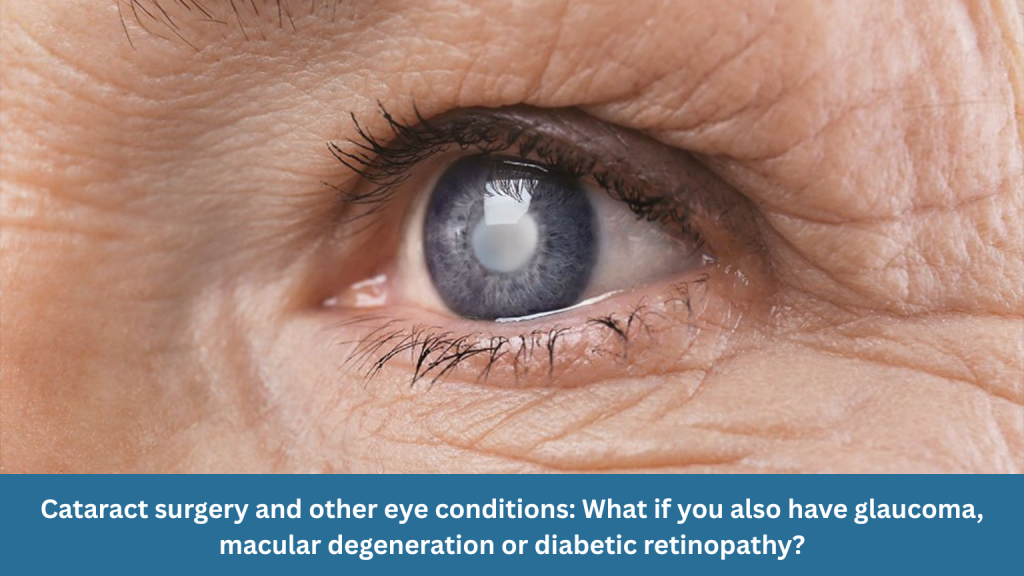
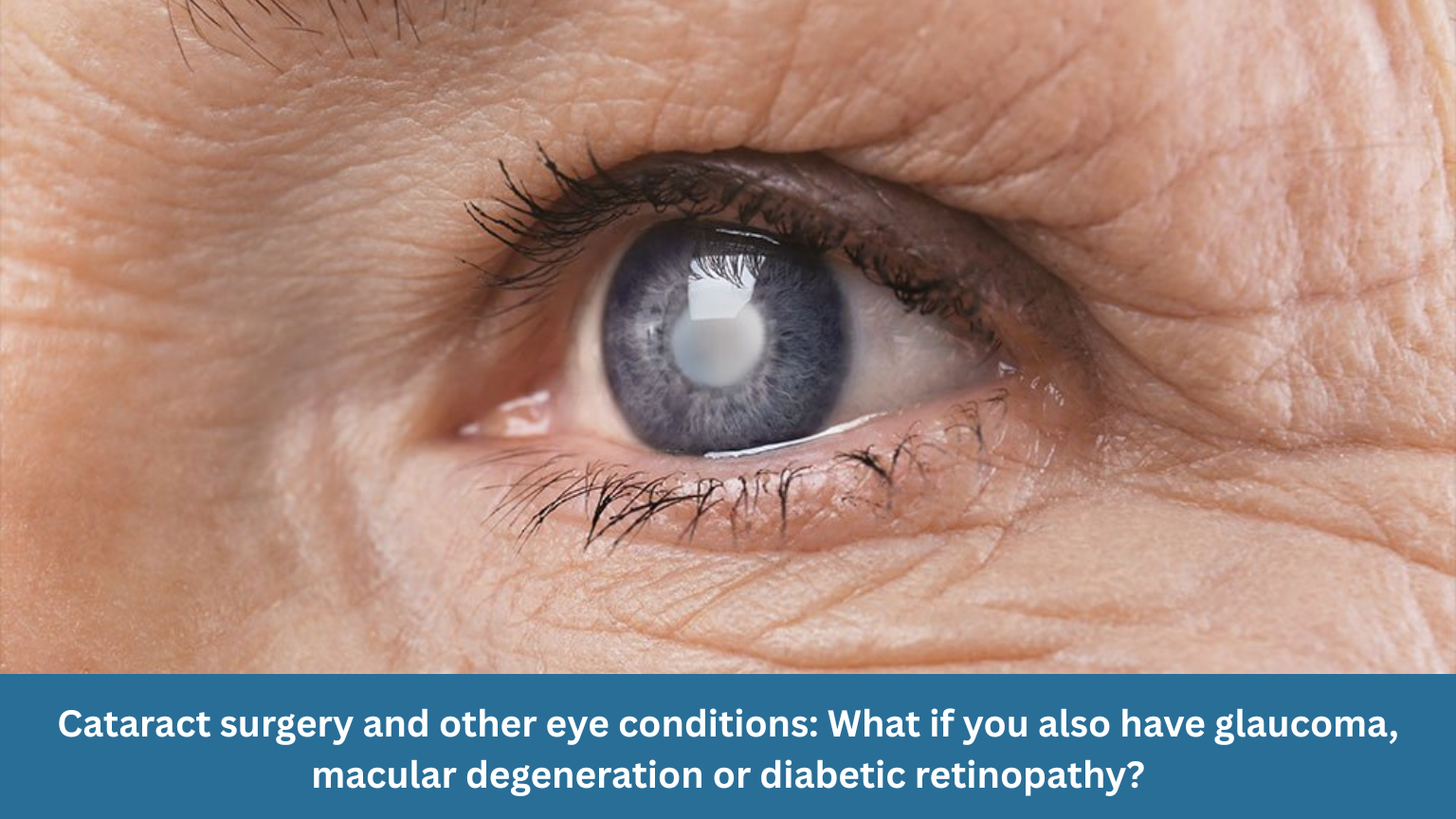
Cataracts are the number one cause of reversible blindness in Australia. Nearly everyone will develop cataracts if they live long enough — but they become significantly more common after 60.
What happens: The clear lens inside your eye gradually clouds over, like looking through a frosted window. Colours appear washed out, night driving becomes difficult, and you may notice halos around lights.
Symptoms to watch for:
- Blurry or hazy vision that worsens over time
- Difficulty seeing at night or in low light
- Colours appearing faded or yellowed
- Frequent prescription changes in your glasses
- Glare or halos around headlights
The good news: Cataract surgery is one of the safest and most effective procedures in modern medicine — with a success rate exceeding 98%. During the procedure, the clouded lens is removed and replaced with a clear artificial lens (IOL), restoring sharp, clear vision.
🔗 Learn about Cataract Surgery with Dr Parth Shah in Canberra

2. Age-Related Macular Degeneration (AMD)
AMD is the leading cause of vision loss in Australians over 50, affecting around 1 in 7 people over 50. It damages the macula — the central part of your retina responsible for sharp, detailed vision.
Types:
- Dry AMD — the more common form, progresses slowly with gradual central vision loss
- Wet AMD — less common but more severe; abnormal blood vessels leak under the retina and can cause rapid vision loss
Symptoms to watch for:
- Blurry or distorted central vision (straight lines appear wavy)
- Dark or blank spots in the centre of your vision
- Difficulty reading fine print or recognising faces
- Colours seeming less vivid
Risk factors include smoking, family history, UV exposure, and cardiovascular disease. Early detection through regular retinal examinations is critical.
3. Glaucoma — The Silent Thief of Sight
Glaucoma is particularly dangerous because it causes no symptoms until significant vision is already lost. It occurs when pressure inside the eye damages the optic nerve — gradually destroying peripheral (side) vision.
Glaucoma affects over 300,000 Australians, with risk rising sharply after 60. By the age of 80, around 1 in 10 Australians will be affected. Having a first-degree relative with glaucoma more than doubles your risk at any age.
Symptoms (in later stages):
- Loss of peripheral (side) vision
- Tunnel vision in advanced stages
- In acute cases: sudden eye pain, headache, nausea, and blurry vision (a medical emergency)
Because early glaucoma has no symptoms, regular eye pressure tests and optic nerve assessments are the only way to catch it before serious damage occurs.
4. Diabetic Retinopathy
If you have Type 1 or Type 2 diabetes, your risk of retinopathy — damage to the blood vessels in the retina — rises significantly with age. After 20 years of diabetes, nearly all Type 1 and over 60% of Type 2 diabetics will have some form of retinopathy.
Symptoms to watch for:
- Fluctuating or blurred vision
- Floaters (spots or strings floating in your vision)
- Dark areas in your visual field
- Poor colour vision
Annual dilated eye examinations are essential for anyone over 60 with diabetes, regardless of whether you have symptoms.
5. Dry Eye Syndrome
Dry eye is extremely common after 60 and affects women more than men. It occurs when your eyes don’t produce enough tears, or when the quality of your tears deteriorates.
Symptoms to watch for:
- Stinging, burning, or scratchy sensation
- Blurry vision that improves temporarily after blinking
- Sensitivity to light or wind
- Paradoxically, excessive watering of the eyes (a reflex response to dryness)
- Difficulty wearing contact lenses or reading for extended periods
While not sight-threatening, untreated dry eye significantly impacts quality of life. Treatment options range from artificial tear drops to prescription medications and specialist in-clinic procedures.

6. Presbyopia — Why Reading Gets Harder
By your early 60s, virtually everyone experiences presbyopia — the loss of the eye’s ability to focus on close objects. It happens because the lens loses flexibility with age.
You’ll notice you need to hold books or menus at arm’s length to read them. Solutions include reading glasses, bifocals, progressive lenses, or in some cases, surgical options. A comprehensive eye examination will determine which solution is right for you.
Warning Signs You Should Never Ignore
Some vision changes need urgent assessment — don’t wait for your next scheduled appointment if you experience any of the following:
- 🔴 Sudden vision loss in one or both eyes — this is a medical emergency
- 🔴 New floaters or flashes of light — may indicate retinal detachment
- 🔴 A curtain or shadow across your vision — possible retinal tear or detachment
- 🔴 Sudden eye pain with nausea and vomiting — possible acute glaucoma attack
- 🔴 Double vision that comes on suddenly
- 🔴 Distorted central vision or wavy straight lines — possible wet AMD
If you experience any of the above, contact an ophthalmologist or emergency department immediately. Early intervention can mean the difference between saving and losing your vision.
Experiencing new or sudden vision changes? Don’t wait for your next routine appointment. Contact Dr Parth Shah’s rooms in Canberra to arrange a prompt assessment.
How Often Should You Get an Eye Check-Up After 60?
The Australian Government and Optometry Australia recommend the following for people over 60:
| Your Situation | Recommended Frequency |
|---|---|
| No known eye conditions, no risk factors | Every 1–2 years |
| Diabetes, high blood pressure, or family history of glaucoma/AMD | Annually (every 12 months) |
| Existing diagnosed eye condition | As directed by your ophthalmologist |
| Any sudden changes in vision | Immediately |
Note: optometrists and ophthalmologists provide different levels of care. Optometrists perform routine checks and prescribe glasses. Ophthalmologists are medical doctors who diagnose and treat complex eye diseases, perform surgery, and manage conditions like glaucoma, AMD, and cataracts. If you are over 60 with risk factors, seeing an ophthalmologist — not just an optometrist — is strongly advisable.
🔗 Learn more about Dr Parth Shah, Ophthalmologist in Canberra
Cataract Surgery After 60: What You Need to Know
Cataracts are almost inevitable as we age — but they no longer have to mean permanent vision loss. Cataract surgery is the most commonly performed elective surgery in Australia, and the results are often life-changing.
Who Needs Cataract Surgery?
You may be a candidate for cataract surgery if:
- Your cataracts are significantly affecting your daily life (driving, reading, watching television)
- Glasses or contact lenses can no longer adequately correct your vision
- You are unable to pass the vision standard required for driving
- Cataracts are preventing treatment of another eye condition (e.g., making retinal examinations difficult)
What to Expect From the Procedure

- Day surgery: Performed under local anaesthetic — you’re awake but comfortable, and home the same day
- Duration: The procedure itself takes around 15–20 minutes
- Recovery: Most patients notice improved vision within 24–48 hours
- Lens choice: Modern intraocular lenses (IOLs) can correct distance vision, reading vision, and even astigmatism
- Medicare rebate: Cataract surgery is covered by Medicare, with out-of-pocket costs depending on your private health insurance level
Dr Parth Shah is an experienced ophthalmologist in Canberra with specialist training in cataract surgery. He takes a personalised approach to each patient — discussing lens options, expected outcomes, and recovery in detail before any procedure is undertaken.
👉 Book a cataract surgery consultation with Dr Parth Shah
8 Lifestyle Tips to Protect Your Vision After 60
While genetics play a role in age-related eye conditions, lifestyle choices can make a significant difference in your eye care after 60.
1. Quit Smoking
Smoking increases your risk of cataracts by up to 3 times and doubles your risk of AMD. It also impairs blood flow to the optic nerve. Quitting at any age reduces risk — it is never too late.
2. Wear UV-Protective Sunglasses
Cumulative UV exposure speeds up cataract formation and increases AMD risk. In Australia’s high-UV environment, quality sunglasses with UV400 protection (or polarised lenses) are essential — even on cloudy days.
3. Eat a Vision-Protective Diet
Nutrients that support eye health include:
- Lutein and zeaxanthin (found in leafy greens, eggs) — protect the macula
- Omega-3 fatty acids (found in oily fish) — reduce dry eye and AMD risk
- Vitamin C and E (found in citrus fruits, nuts) — antioxidants that protect the lens
- Zinc (found in oysters, red meat) — supports retinal health
4. Manage Systemic Health Conditions
High blood pressure, high cholesterol, and diabetes all directly impact eye health. Work with your GP to keep these well-controlled. Your eyes will benefit as much as your heart and kidneys.
5. Exercise Regularly
Regular aerobic exercise lowers intraocular pressure, reducing glaucoma risk. It also improves circulation to the optic nerve and retina. Even 30 minutes of brisk walking, five days a week, makes a measurable difference.
6. Protect Your Eyes From Injury
Wear safety glasses during gardening, home maintenance, and sport. Traumatic eye injuries are a preventable cause of significant vision loss at all ages.
7. Give Your Eyes a Screen Break
Extended screen use causes digital eye strain, dry eyes, and blurred vision. Follow the 20-20-20 rule: every 20 minutes, look at something 6 metres away for 20 seconds. Ensure your screen brightness matches your environment and consider using artificial tear drops if your eyes feel dry during screen use.

8. Know Your Family Eye History
Conditions like glaucoma, AMD, and certain retinal conditions have a strong genetic component. Tell your ophthalmologist if any immediate family members have been diagnosed with these conditions — it changes how closely you need to be monitored and how frequently you should be seen.
Frequently Asked Questions About Eye Care After 60
At what age should you see an ophthalmologist?
Anyone over 60 with risk factors — including diabetes, family history of glaucoma or AMD, or previous eye conditions — should see an ophthalmologist (not just an optometrist) at least annually. Even without risk factors, a baseline examination with an ophthalmologist in your early 60s is strongly advisable.
Can I prevent cataracts from forming?
You cannot completely prevent cataracts as they are a natural part of ageing. However, you can slow their progression by wearing UV-protective sunglasses, not smoking, managing diabetes, and eating a diet rich in antioxidants. When cataracts do significantly affect your vision, surgery is highly effective and safe.
Is cataract surgery safe for people over 70?
Yes. Cataract surgery is routinely and safely performed in patients in their 70s, 80s, and even 90s. Age alone is not a contraindication. Your ophthalmologist will assess your overall health and ocular health to confirm you are a good candidate for the procedure.
Can dry eyes cause permanent vision damage?
In most cases, dry eye causes discomfort rather than permanent damage. However, severe and untreated dry eye can in rare cases lead to corneal scarring. More commonly, it significantly impacts quality of life and should be assessed and treated by an ophthalmologist.
How do I know if I have glaucoma?
In most cases, you won’t — until it’s advanced. That’s why glaucoma is called the silent thief of sight. The only way to know is through a comprehensive eye examination that includes intraocular pressure measurement and optic nerve assessment. Regular check-ups are your best — and only — protection.
Does Medicare cover eye specialist appointments in Australia?
Yes. In Australia, visits to an ophthalmologist are covered by Medicare when referred by a GP or optometrist. Most diagnostic tests (such as OCT scans and visual field tests) are also Medicare-rebateable. Cataract surgery and other procedures carry Medicare rebates, with out-of-pocket costs dependent on your level of private health insurance.
What is the difference between an optometrist and an ophthalmologist?
An optometrist is a health professional who tests your vision, prescribes glasses or contact lenses, and detects eye conditions. An ophthalmologist is a fully qualified medical doctor who specialises in eye disease — they can diagnose, medically manage, and surgically treat all eye conditions. For people over 60 with risk factors, seeing an ophthalmologist provides a more comprehensive level of assessment and care.
Do I need a GP referral to see Dr Parth Shah?
Yes, a GP or optometrist referral is required to access Medicare rebates for specialist ophthalmology appointments. Referrals from GPs are valid for 12 months (or 3 months for non-specific referrals). Simply ask your GP or optometrist to refer you to Dr Parth Shah at his Canberra rooms. You can also contact our rooms directly and we will guide you through the referral process.
🔗 For more frequently asked questions, visit our Frequently Asked Questions page.
Book Your Eye Assessment in Canberra
If you’re over 60 — or approaching 60 — there has never been a better time to take your eye health seriously. Most conditions that cause vision loss in older Australians are preventable or treatable when caught early. The right eye care after 60 can protect decades of clear, independent vision.
Dr Parth Shah is a specialist ophthalmologist based in Canberra, with expertise in:
- ✓ Cataract assessment and surgery
- ✓ Glaucoma diagnosis and management
- ✓ Retinal and macular conditions
- ✓ Diabetic eye disease
- ✓ Comprehensive adult eye examinations
With a patient-centred approach and a commitment to evidence-based care, Dr Shah works with each patient to understand their vision goals and create a personalised management plan.
👉 Request a Referral or Book a Consultation Today
To see Dr Parth Shah, ask your GP or optometrist for a referral. Medicare rebates apply for all referred specialist appointments.