
Last Updated: 23 May, 2025
Laser eye surgery is a transformative procedure that offers improved vision without relying on glasses or contact lenses. However, a successful recovery is essential to achieving the best results. This detailed day-by-day guide will help you understand what to expect and how to care for your eyes during recovery.
Pre-surgery preparation
Before we dive into the recovery timeline, it is important to understand what you can do before the procedure:
- Consultation & Tests: Ensure your eyes are evaluated thoroughly to confirm eligibility.
- Plan ahead: Arrange for someone to drive you home after surgery.
- Avoid eye strain: Rest your eyes for a few days leading up to surgery by limiting screen time.
Day 0: The day of surgery
1. What to expect:
After the surgery, your vision may appear blurry or hazy. This is to be expected. You may also experience mild discomfort, tearing, or a sensation of something in your eye.
2. Care instructions:
- Rest your eyes as much as possible.
- Wear protective goggles or shields provided by your doctor.
- Use prescribed eye drops to reduce dryness and risk of infection.
3. Avoid:
- Rubbing your eyes.
- Driving or performing strenuous activities.
Day 1: The first follow-up appointment
1. What to expect:
Your ophthalmologist will assess your healing progress. By this time, many patients notice an improvement in vision, but it would not be perfect yet.
2. Care instructions:
- Continue using eye drops as prescribed.
- Rest your eyes frequently.
3. Avoid:
Swimming, hot tubs, or exposing your eyes to dust and smoke.
Days 2-7: The critical healing phase
1. What to expect:
During this period, your vision will gradually stabilise. You may experience sensitivity to light or glare, especially at night.
2. Care instructions:
- Wear sunglasses outdoors to protect against UV rays.
- Follow your prescribed medication routine strictly.
- Take breaks from screens to reduce eye strain.
3. Avoid:
- Using makeup or lotions around your eyes.
- Activities that might lead to accidental eye injuries, such as contact sports.
Weeks 2-4: Adjusting to new vision
1. What to expect:
Most patients report significantly clearer vision during this time. However, mild dryness or halos around lights might persist.
2. Care instructions:
- Attend follow-up appointments to monitor healing.
- Stick to a routine that minimises eye strain.
3. Avoid:
- Excessive screen time without breaks.
- Sleeping without your protective eyewear if instructed.
Months 1-3: Full recovery & Stabilisation
1. What to expect:
Your vision should be close to its final clarity. Any residual side effects, such as halos or glare, typically subside by the end of this period.
2. Care instructions:
- Maintain regular check-ups as per your doctor’s advice.
- Stay hydrated and maintain a healthy diet to support eye health.
3. Avoid:
Ignoring symptoms like persistent discomfort or vision irregularities—report these to your doctor immediately.
Long-term care and Maintenance
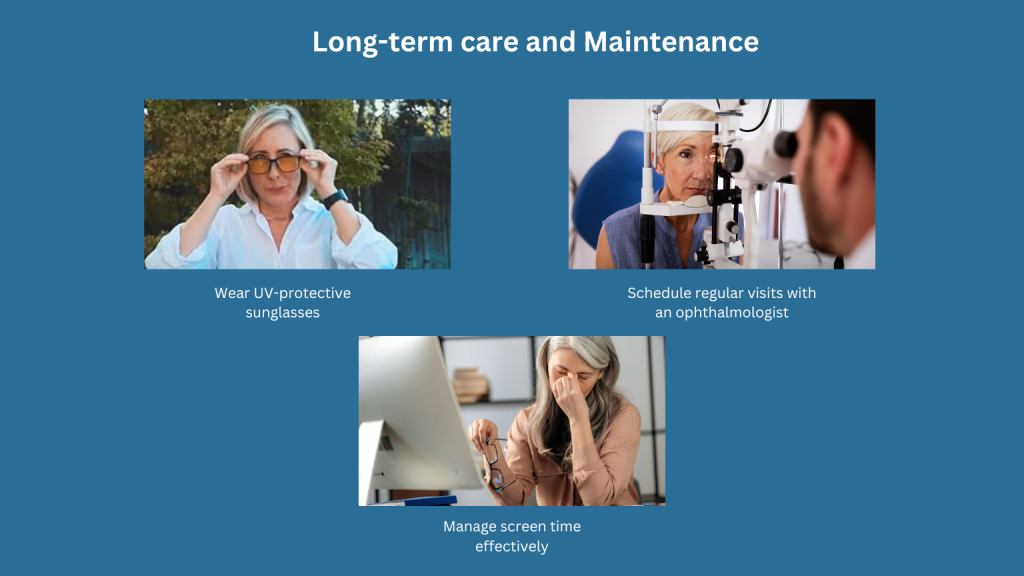
Laser eye surgery results are generally long-lasting, but caring for your eyes is essential to maintain the benefits.
- Protect your eyes from UV rays with sunglasses.
- Regularly visit your ophthalmologist for routine eye exams.
- Manage screen time effectively.
Conclusion
Laser eye surgery offers the incredible gift of clearer vision, but achieving the best results requires proper care and patience during the recovery process. By following this day-by-day guide and adhering to your doctor’s instructions, you can ensure a smooth healing journey and long-term success. Remember, your eyes deserve ongoing care—protect them from harmful UV rays, maintain regular check-ups, and adopt healthy habits to preserve your vision for years to come.
Author bio
Dr Parth Shah is a leading ophthalmologist in Canberra, specialising in lens and cataract surgery. With extensive training and experience, he is renowned for his expertise in the field. Dr Shah is dedicated not only to performing successful surgeries but also to patient education. His compassionate approach, combined with technical proficiency, has earned him the trust and gratitude of countless patients. He is a true advocate for eye health and a trusted name in the Canberra ophthalmology community.
FAQs