

Last Updated: 31 January, 2026
Cataract surgery is one of the most successful and commonly performed eye surgeries worldwide, helping millions of people regain clear vision every year. With modern microsurgical techniques, the procedure is safe, efficient, and typically leads to excellent results.
However, during the recovery phase, some patients experience watery eyes (medically called epiphora). While this is often temporary, it can sometimes be bothersome or, in rare cases, a sign of a complication. Understanding why watery eyes occur, what to expect, and when to seek help is key to ensuring a smooth recovery.
Why do eyes water after cataract surgery?
Watery eyes after cataract surgery are not uncommon. In fact, mild tearing is often part of the normal healing process. There are several possible reasons:
1. Normal healing response
After surgery, the eye’s surface tissues need time to recover. Mild irritation can trigger the tear glands to produce more tears, which helps keep the eye lubricated and protected.
2. Dry eye syndrome
Interestingly, one of the most common causes of watery eyes is actually dryness. Cataract surgery can temporarily disrupt the tear film and corneal nerves, leading to dryness and irritation. In response, the eye produces excess “reflex tears,” causing watering.
3. Ocular surface irritation
- Post-surgical drops (antibiotics, anti-inflammatories) can sometimes irritate the ocular surface.
- Tiny surgical incisions, even though self-sealing, may create temporary irritation.
- In rare cases, sutures (if used) can rub against the eye surface, increasing tear production.
4. Blocked or narrowed tear ducts
If the normal tear drainage system (lacrimal ducts) is partially blocked or not working properly, tears cannot drain away efficiently and instead overflow onto the cheeks.
5. Inflammation or Infection (less common, but serious)
If watery eyes are accompanied by significant pain, redness, swelling, or blurred vision, this may indicate infection (endophthalmitis) or severe inflammation. Although rare, these require immediate medical attention.
Symptoms of watery eyes after cataract surgery
While mild watering is usually not a cause for concern, patients should be aware of the range of symptoms:
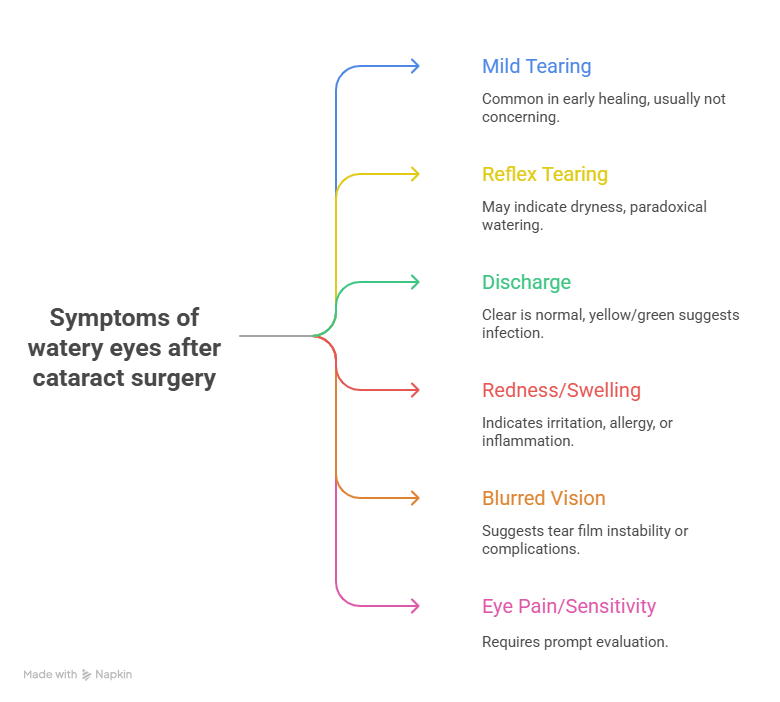
- Mild, persistent tearing: Common in the early healing phase.
- Reflex tearing with dryness: Eyes may feel gritty or burning, leading to paradoxical watering.
- Discharge: Clear tears are normal; however, yellow or green discharge suggests infection.
- Redness or swelling: May indicate irritation, allergy, or inflammation.
- Blurred vision: If combined with watering, could suggest tear film instability or more serious complications.
- Eye pain or light sensitivity: Should be evaluated promptly.
How common are watery eyes after cataract surgery?
Watery eyes after cataract surgery are very common, and in most cases, they are simply a normal part of the healing process.
Studies show that up to 30–40% of patients experience increased tearing in the first few weeks, primarily due to temporary dry eye or mild irritation from the surgery. This is even more frequent in people above the age of 60, as the tear film naturally becomes unstable with age.
In the majority of patients, this tearing is mild, intermittent, and improves gradually as the eye heals and the tear film stabilises. Both traditional and laser cataract surgery can cause temporary watering, although laser-assisted procedures may sometimes lead to slightly less surface irritation.
While watery eyes are usually harmless and short-lived, persistent tearing is less common. Only a small percentage—around 5–10%—experience long-term watering due to issues like meibomian gland dysfunction, significant dry eye disease, or partial tear duct obstruction.
Overall, watery eyes are considered a normal and expected part of recovery for most patients.
What are the risk factors for watery eyes after cataract surgery?
Certain factors can increase the likelihood of developing watery eyes after cataract surgery. These include:
- Pre-existing dry eye disease: this is extremely common in older adults. When the tear film is already unstable, even minor surgical irritation can trigger reflex tearing. Patients with blepharitis or meibomian gland dysfunction (MGD) are also more prone to watering because oil gland blockages disrupt the tear film’s lipid layer.
- Age: as we get older, our tear glands produce fewer high-quality tears, and tear drainage efficiency decreases.
- Medical conditions: E.g. diabetes, thyroid disorders, and autoimmune diseases (like rheumatoid arthritis and Sjögren’s) can affect tear production and increase inflammation, making post-operative watering more likely.
- Environmental factors: air conditioning, heating, dust, wind exposure, and prolonged screen time can worsen dryness and reflex tearing.
- Allergies
- Blocked tear ducts.
- Prior eyelid surgeries.
Being aware of these risk factors helps patients manage expectations and follow preventive care more closely during recovery.
How do post-operative drops influence watering?
Post-operative drops are essential for healing, but they can sometimes contribute to temporary watery eyes. Antibiotic and anti-inflammatory drops may cause mild burning or stinging when first applied. This irritation stimulates the lacrimal gland to produce additional tears as a protective response.
Many eye drops contain preservatives, such as benzalkonium chloride (BAK), which can irritate the ocular surface when used multiple times a day. This irritation disrupts the tear film and triggers reflex tearing. Patients who already have dry or sensitive eyes are more likely to experience this effect.
Steroid drops help reduce inflammation, but in some individuals, they may temporarily destabilise the tear film. On the other hand, NSAID drops can dry the surface slightly, again leading to watery eyes.
Using the drops exactly as prescribed, without overuse or missed doses, is crucial. Overuse may worsen irritation, while underuse can lead to increased inflammation—both of which can cause tearing. If watering seems to worsen after starting a particular drop, your ophthalmologist may switch you to preservative-free formulations to improve comfort and reduce excess tearing.
How long does watering last?
- Mild tearing often improves within a few days to weeks as the eye heals.
- Dry eye–related watering may persist for several weeks or months but usually improves with proper management.
- Persistent or worsening watering beyond 4–6 weeks should be reviewed by your ophthalmologist to rule out tear duct obstruction or other issues.
Effective management of watery eyes
1. Artificial tears (lubricating drops)
- Help restore the tear film and reduce irritation.
- Preservative-free drops are preferred, especially if used frequently.
2. Anti-inflammatory drops
- Prescribed to reduce swelling and inflammation inside the eye.
- It is important to follow dosage carefully for best results.
3. Proper use of post-operative drops
- Overuse or underuse of prescribed drops can cause problems.
- Always follow your ophthalmologist’s instructions strictly.
4. Warm compresses and lid hygiene
- Improve the function of the meibomian glands in the eyelids.
- Stabilise the tear film and reduce reflex tearing.
5. Tear duct evaluation
- If watering is persistent, your doctor may test whether the tear drainage system is blocked.
- In some cases, procedures may be required to open blocked ducts.
6. Lifestyle and self-Care tips
- Avoid rubbing your eyes, as this delays healing.
- Wear sunglasses outdoors to reduce irritation from wind, dust, and bright light.
- Use a humidifier indoors if the air is dry.
- Take regular breaks when using screens to prevent eye dryness.
When to seek medical help?
While most watery eyes resolve with time and simple treatment, it is important to contact your ophthalmologist if you notice:
- Persistent or worsening tearing beyond a few weeks.
- Thick, yellow or green discharge.
- Severe redness, pain, or swelling.
- Blurred or reduced vision.
- Sudden light sensitivity.
These may indicate complications such as infection, severe inflammation, or blocked tear ducts, which need urgent treatment.
Prevention tips after cataract surgery
- Use prescribed drops exactly as instructed.
- Avoid exposure to dust, smoke, and wind in the early weeks.
- Keep eyelids clean and practice gentle eyelid hygiene.
- Stay well hydrated and maintain a healthy diet rich in omega-3 fatty acids. (good for tear film health)
- Attend all scheduled post-operative follow-up visits.
Conclusion
Watery eyes after cataract surgery are usually temporary and can be managed effectively. Common causes include normal healing, dry eyes, irritation, or tear duct issues. With proper care—such as using lubricating drops, following post-operative instructions, and protecting the eyes—most patients find that the problem settles naturally.
However, if watery eyes persist, cause discomfort, or affect vision, it is important to seek professional advice without delay.
If you are experiencing watery eyes or have concerns after cataract surgery, book a consultation with Dr. Parth Shah, Ophthalmologist in Canberra, for expert guidance and personalised care to support your smooth recovery.
Author bio
Dr Parth Shah is a leading ophthalmologist in Canberra, specialising in eye injections. With extensive training and experience, he is renowned for his expertise in the field. Dr Shah is dedicated not only to performing successful surgeries but also to patient education. His compassionate approach, combined with technical proficiency, has earned him the trust and gratitude of countless patients. He is a true advocate for eye health and a trusted name in the Canberra ophthalmology community.