Last Updated: 27 May, 2026
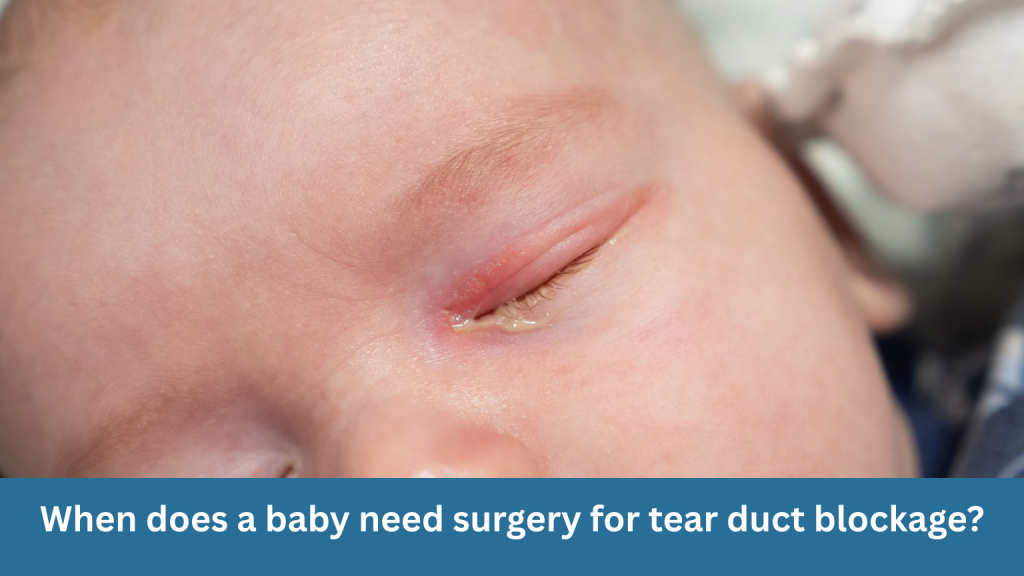
Watery eyes are common in newborns and young babies. In many cases, the cause is a blocked tear duct, also known as congenital nasolacrimal duct obstruction. While this condition often clears on its own, some babies may eventually need a minor procedure to correct it.
If you are a parent wondering whether your baby might need surgery, here is what you need to know.
What is tear duct blockage in babies?
Tears normally drain from the eyes through small channels into the nose. In some babies, this drainage system has not fully developed at birth. As a result, tears build up and overflow onto the cheek.
This condition is medically called congenital nasolacrimal duct obstruction and affects up to 1 in 5 newborns.
What are the symptoms?
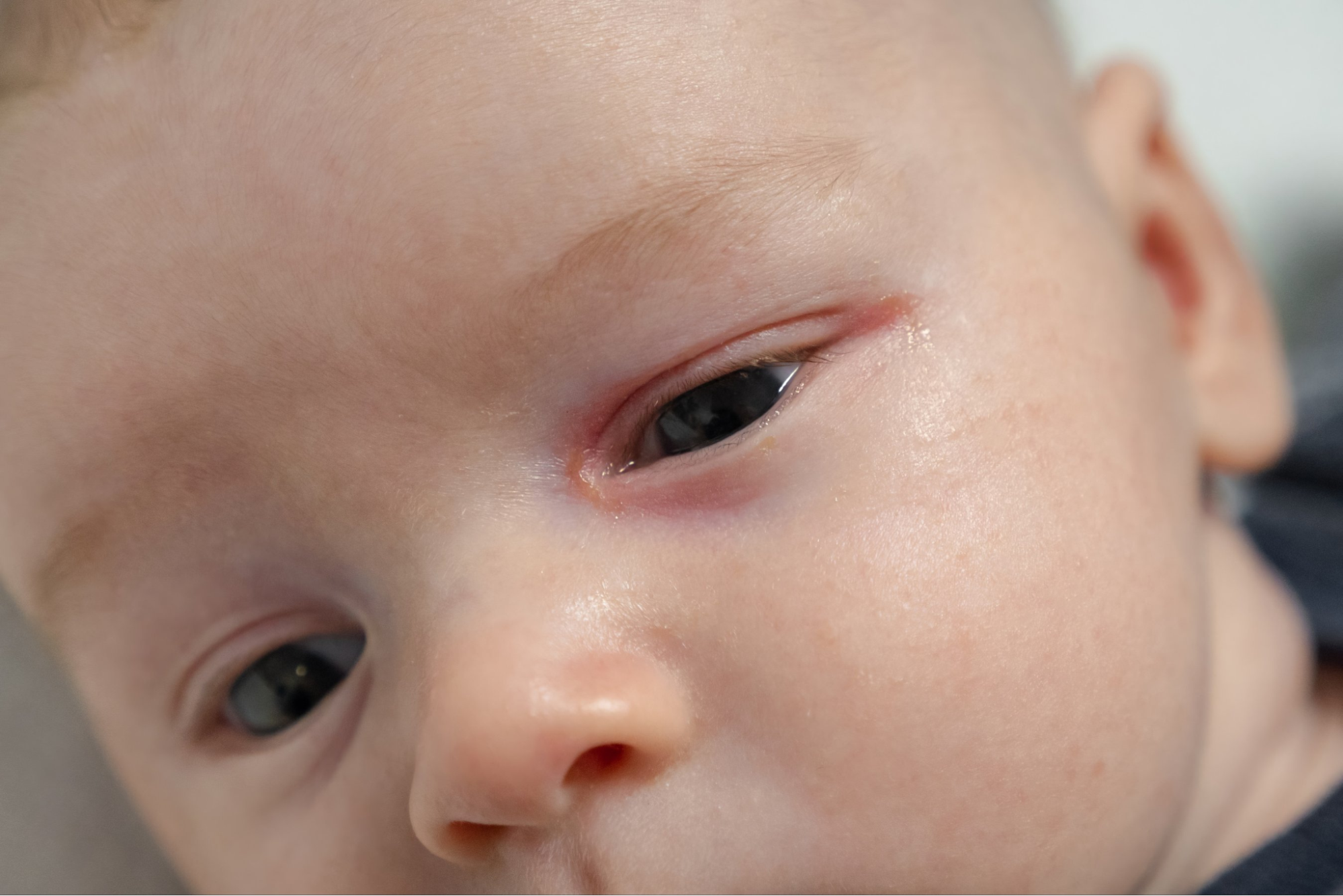
Common signs of tear duct blockage include:
- Constant watering in one or both eyes.
- Tears overflowing onto the cheeks.
- Sticky discharge, especially after sleep.
- Mild redness around the eyelids.
- Crusting on the eyelashes.
Importantly, the white part of the eye is usually not very red. If the eye becomes very red, swollen or painful, it may indicate infection and should be assessed promptly.
Does tear duct blockage go away on its own?
In most cases, yes.
Around 90% of blocked tear ducts resolve naturally by the time a baby is 12 months old. As your baby grows, the drainage system matures and the blockage often opens without any surgical treatment.
Because of this high rate of natural resolution, surgery is rarely recommended in the first few months of life.
When is treatment needed?
Initial management usually includes:
- Gentle tear duct massage. (as advised by your doctor)
- Keeping the eyelids clean.
- Antibiotic drops if the eye becomes infected.
If symptoms are mild and improving, observation is often all that is required.
However, further treatment may be considered if:
- Symptoms persist beyond 12 months of age.
- There are repeated infections. (dacryocystitis)
- Discharge is frequent and troublesome.
- The blockage significantly affects quality of life.
When does a baby need surgery?
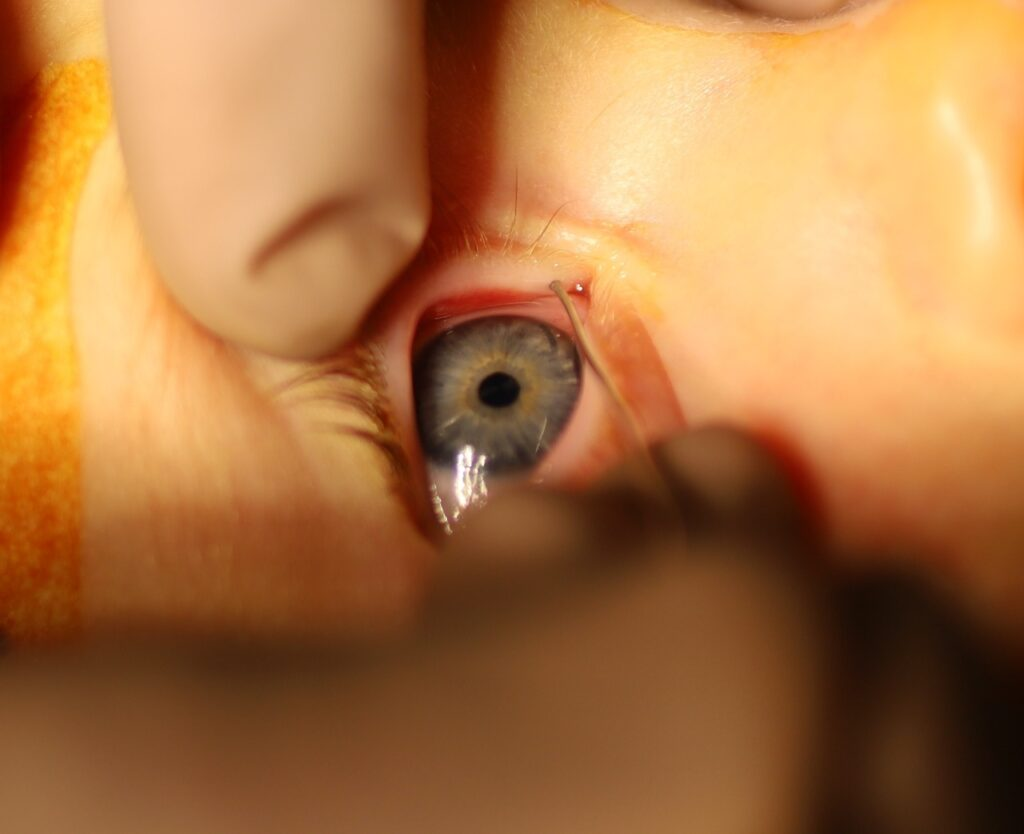
Surgery is generally considered if the tear duct remains blocked after 12 months of age.
The most common procedure is called probing. During this short procedure:
- A very fine instrument is passed through the tear duct.
- The blockage is gently opened.
- It is usually performed under a brief general anaesthetic.
- The procedure typically takes only a few minutes.
In Australia, this is usually done as a day procedure, meaning your child can go home the same day.
The success rate of probing in infants is very high, particularly when performed between 12 and 18 months of age.
What if probing does not work?
In a small number of cases, further treatment may be needed. Options may include:
- Repeat probing.
- Balloon dilation.
- Insertion of a temporary silicone stent.
These procedures are less commonly required but are very effective when necessary.
Is tear duct surgery safe?
Yes. Probing for tear duct blockage is considered very safe and is one of the most common eye procedures performed in infants.
Complications are rare, and most babies recover quickly with minimal discomfort.
Your ophthalmologist will discuss the risks and benefits in detail before recommending surgery.
When should you see an eye specialist?
You should seek specialist assessment if:
- The blockage persists beyond 9–12 months.
- There are repeated infections.
- The area between the eye and nose becomes swollen or tender.
- You are concerned about your baby’s vision.
Early assessment ensures the right timing for treatment and helps prevent complications.
Conclusion
Tear duct blockage in babies is common and, in most cases, resolves naturally within the first year of life. Surgery is only considered when symptoms persist beyond 12 months, infections become recurrent, or conservative treatments have not been successful. When needed, the procedure is quick, safe and highly effective.
If you are concerned about your baby’s persistent watering eyes or repeated infections, a specialist assessment can provide reassurance and clear guidance. Dr Parth Shah is an experienced ophthalmologist who offers comprehensive evaluation and management of paediatric tear duct conditions in Australia. To arrange an appointment or seek expert advice, contact Dr Parth Shah’s rooms today and ensure your child receives the right care at the right time.
Author Bio
Dr Parth Shah is a leading ophthalmologist in Canberra, with a special interest in paediatric eye surgery. With extensive training and experience, he is renowned for his expertise in the field. Dr Shah is dedicated not only to performing successful surgeries but also to patient education. His compassionate approach, combined with technical proficiency, has earned him the trust and gratitude of countless patients. He is a true advocate for eye health and a trusted name in the Canberra ophthalmology community.