Last Updated: 2 September, 2025
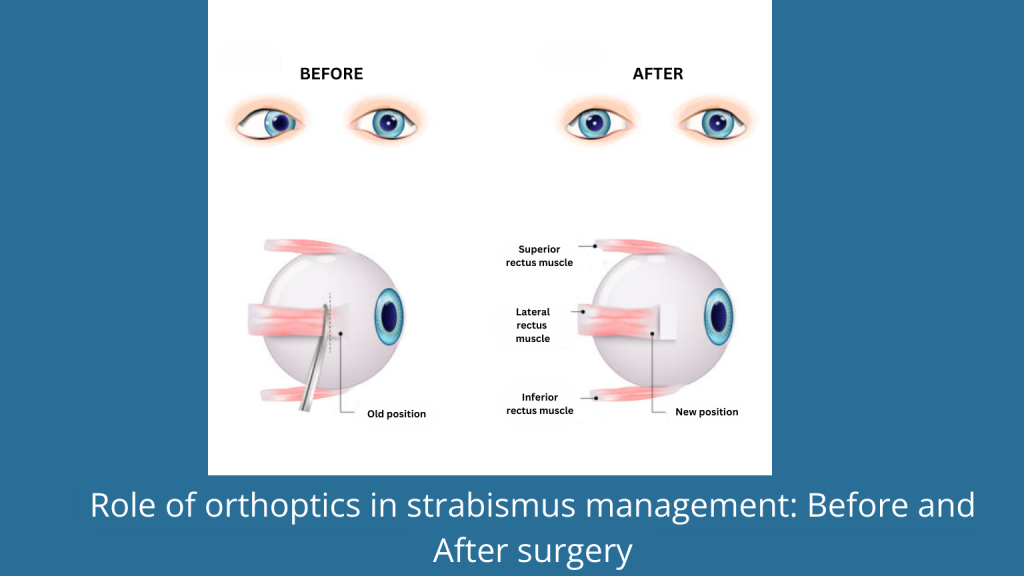
Strabismus, often referred to as “crossed eyes” or “squint”, is a condition where the eyes do not properly align with each other when looking at an object. This misalignment can lead to significant visual issues, including double vision and impaired depth perception. It can also have psychological effects, particularly in children, impacting self-esteem and social interactions. While surgical intervention is often necessary for more severe cases of strabismus, the role of orthoptics is crucial in both the pre-operative and post-operative phases of treatment. This blog will explore how orthoptic treatment can enhance outcomes for patients undergoing strabismus surgery.
Understanding strabismus
Strabismus can occur in one or both eyes and can be classified into different types, including:
- Esotropia: When one or both eyes turn inward.
- Exotropia: When one or both eyes turn outward.
- Hypertropia: When one eye is higher than the other.
- Hypotropia: When one eye is lower than the other.
Causes of strabismus
The causes of strabismus can vary and may include:
- Genetic factors: A family history of strabismus can increase the likelihood of developing the condition.
- Neurological disorders: Conditions that affect the brain’s control over eye muscles can lead to strabismus.
- Eye muscle imbalances: Weakness or imbalance in the eye muscles may result in misalignment.
- Refractive errors: Significant uncorrected vision problems can lead to strabismus, particularly in children.
What is orthoptics?
Orthoptics is a specialised field within eye care that focuses on diagnosing and treating vision problems related to eye movement and alignment. Orthoptists are trained professionals who work alongside ophthalmologists to manage conditions like strabismus and amblyopia (lazy eye). Their interventions often include:
- Diagnostic assessments: Evaluating visual function, eye movement, and binocular vision.
- Vision therapy: Utilising exercises and techniques to strengthen eye muscles and improve coordination.
- Prism therapy: Using specially designed glasses to help align vision and reduce double vision.
The role of orthoptics before strabismus surgery
Orthoptics plays a vital role in preparing patients for strabismus surgery. The following aspects highlight its significance:
1. Pre-surgical assessment
Before undergoing surgery, a thorough evaluation by an orthoptist is essential. This assessment may include:
- Visual acuity testing: Measuring how well each eye sees, which helps determine if amblyopia is present.
- Cover test: A test to observe eye alignment while one eye is covered, helping identify the type and extent of strabismus.
- Prism testing: Determining the degree of misalignment by using prisms to assess the amount of deviation in each eye.
2. Customising the surgical plan
Based on the assessment results, the orthoptist provides critical information that helps the ophthalmologist tailor the surgical approach. This includes:
- Identifying muscle involvement: Determining which eye muscles are weak or overactive, enabling precise surgical planning.
- Establishing patient goals: Discussing desired outcomes with the patient, ensuring that expectations are realistic and achievable.
3. Pre-operative vision therapy
In some cases, orthoptists may initiate pre-operative vision therapy to prepare the eyes for surgery. This can include:
- Eye exercises: Strengthening the muscles around the eyes to improve coordination and function.
- Adaptation to prisms: Helping the patient adjust to any prescribed prism glasses that may alleviate symptoms before surgery.
The role of orthoptics after strabismus surgery

After surgery, the role of orthoptics shifts to rehabilitation and support. Key functions include:
1. Post-surgical assessment and monitoring
Following strabismus surgery, orthoptists play an important role in evaluating the patient’s recovery. This involves:
- Assessing eye alignment: Regular checks to ensure that the eyes are correctly aligned after surgery.
- Identifying complications: Monitoring for any signs of complications, such as inflammation and infection.
2. Vision therapy for recovery
Orthoptic therapy post-surgery aims to enhance recovery and visual outcomes. This may include:
- Binocular vision exercises: Techniques designed to improve how both eyes work together, which is crucial for depth perception and overall visual function.
- Targeted eye exercises: Specific exercises aimed at strengthening eye muscles that may have been affected during surgery.
3. Prism therapy for alignment
In some cases, orthoptists may recommend prism therapy to aid in the patient’s adaptation to the new alignment. This involves:
- Customised prism glasses: Providing glasses with prisms that can help reduce double vision and improve comfort.
- Adjustments as needed: Monitoring and adjusting the prism strength based on the patient’s progress and needs.
Key benefits of orthoptics in strabismus management
The integration of orthoptics into strabismus management offers several advantages:
- Comprehensive care: Orthoptics ensures a holistic approach, addressing both the functional and reconstructive aspects of strabismus.
- Improved surgical outcomes: Detailed pre-operative assessment can enhance results from eye muscle surgery.
- Enhanced recovery: Post-surgical orthoptic care can shorten recovery times and improve long-term visual health.
- Patient empowerment: Providing education and exercises empowers patients to take an active role in their recovery and visual health.
When to consult an orthoptist?
If you or your child exhibits signs of strabismus, such as misalignment of the eyes, frequent squinting, or difficulty focusing, consulting an orthoptist is essential. Early intervention can lead to better outcomes, especially in children, whose visual systems are still developing.
Why choose Dr Parth Shah for strabismus surgery in Canberra?
- Extensive experience strabismus surgery with a proven track record of successful outcomes.
- Specialises in correcting eye alignment.
- Uses advanced surgical techniques to ensure precision and safety.
- Offers personalised care, tailoring treatment plans to each patient’s needs.
- Provides thorough pre-operative assessments and post-operative support.
- Trusted in Canberra for delivering high-quality strabismus surgery for both children and adults.
Conclusion
By providing thorough assessments, pre-operative preparation, and post-surgical rehabilitation, orthoptists play a significant role in the management of strabismus. Their expertise not only helps improve eye alignment but also supports overall visual function, leading to a better quality of life for patients. If you are considering surgery for strabismus, partnering with an orthoptist can help ensure a successful treatment journey.
As Dr Parth Shah, an ophthalmologist, I encourage patients to explore all available options for strabismus management, emphasising the importance of a multidisciplinary approach for optimal outcomes.
Author bio
Dr Parth Shah is a leading ophthalmologist in Canberra, specialising in eye muscle surgery. With extensive training and experience, he is renowned for his expertise in the field. Dr Shah is dedicated not only to performing successful surgeries but also to patient education. His compassionate approach, combined with technical proficiency, has earned him the trust and gratitude of countless patients. He is a true advocate for eye health and a trusted name in the Canberra ophthalmology community.
FAQs