Table of Contents
ToggleLast Updated: 17 February, 2026
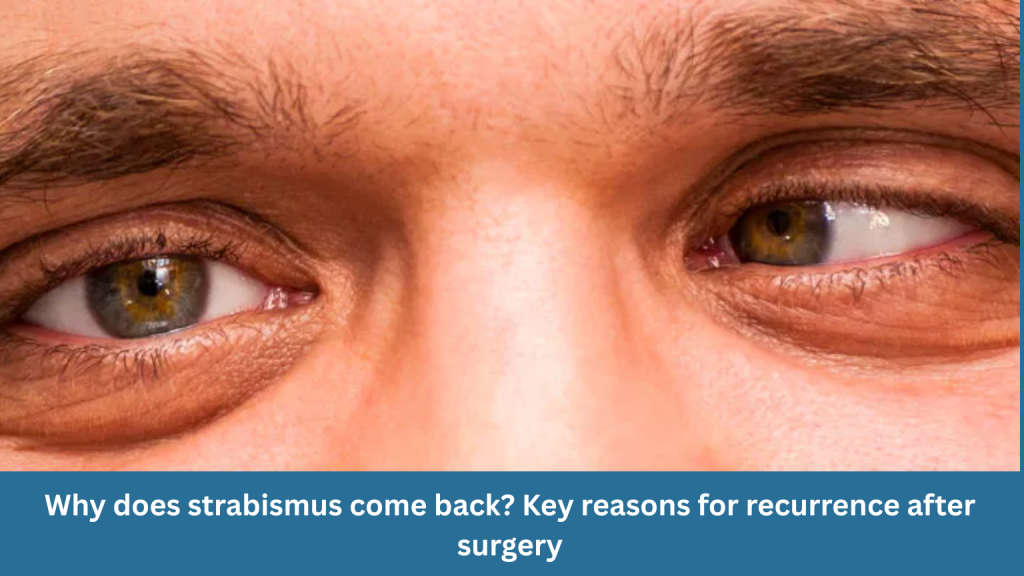
Strabismus (eye misalignment) surgery is highly effective and helps many children and adults restore better eye alignment and visual comfort. At the same time, some patients may notice the eyes drifting again months or even years after surgery. This can be concerning, but recurrence is not uncommon — and it does not mean the surgery was unsuccessful.
Understanding why strabismus can return helps set realistic expectations and ensures long-term visual health through timely monitoring and treatment.
Below are the key reasons strabismus may recur after surgery, explained clearly and with patient-focused accuracy.
How underlying muscle or nerve issues contribute to recurrence?
Some types of strabismus are caused by neurological or congenital muscle abnormalities that surgery cannot completely correct.
Even after aligning the eye muscles surgically, the underlying imbalance may still exist, which can lead to:
- Gradual drifting outward or inward – Over time, the eyes may slowly shift from their corrected position due to natural changes in eye coordination, muscle balance, or the way the brain controls alignment.
- Changes in muscle strength over time – Eye muscles can weaken, tighten, or adapt differently as a person grows or ages, which may cause subtle alignment changes even years after successful surgery.
- Reduced control of eye movements – Factors such as fatigue, illness, stress, or underlying neurological issues can affect the brain’s ability to keep the eyes working together, leading to periods of misalignment.
These pre-existing conditions make recurrence more likely.
How do children’s growth and development affect long-term alignment?
Children’s eyes, muscles, and facial structures continue to grow, which can influence the stability of the surgical result.
As the muscles develop, alignment may shift due to:
- Uneven muscle growth.
- Changing facial anatomy.
- Natural developmental changes.
This is why some children require more than one procedure throughout childhood or adolescence.
How amblyopia (lazy eye) increases the risk of strabismus returning?
When one eye has weaker vision, the brain naturally prefers the stronger eye, making long-term alignment more challenging.
If amblyopia is not fully corrected, this imbalance may cause:
- The weaker eye to drift again.
- Reduced binocular coordination.
- Difficulty maintaining alignment over time.
Managing amblyopia is essential to preventing recurrence.
How healing and tissue changes affect surgical outcomes?
Each patient’s healing response is unique, and this can significantly influence the final eye alignment after strabismus surgery.
After the procedure, the way tissues heal can vary widely from person to person. Some individuals may develop scar tissue that subtly alters muscle movement, while others may experience mild overcorrection or undercorrection as the muscles settle into their new positions.
In some cases, a gradual drift can occur months or even years after surgery due to natural tissue tightening or changes in muscle elasticity. These individual healing differences are a major reason why long-term outcomes can vary, even when the surgery itself is performed perfectly.
How systemic or neurological conditions influence alignment over time?
Certain medical conditions affect muscle control and eye movement stability.
Conditions such as:
- Thyroid eye disease.
- Stroke or neurological disorders.
- Diabetes-related nerve weakness.
These may cause ongoing strain on the eye muscles, leading to misalignment returning even after surgery.
How age at the time of surgery affects recurrence risk?
Both very early and late strabismus surgeries come with unique considerations that can influence long-term alignment.
In very young children, the visual system and binocular pathways are still developing. Because these systems are immature, the alignment can shift as the child grows, increasing the chance of recurrence. In adults, long-standing muscle imbalance or years of visual adaptation to misalignment can also affect stability after surgery. When surgery is delayed for many years, the brain may become accustomed to the misaligned position, making it harder to maintain perfect alignment after correction. Every patient’s visual development and muscle response differ, which is why timing plays an important role in long-term outcomes.
When should you see an eye specialist?
You should book a review if you notice:
- One eye drifting inward or outward.
- Intermittent misalignment is becoming more frequent.
- Eye strain or double vision.
- Reduced depth perception.
- Difficulty maintaining focus.
Early evaluation helps determine whether the recurrence is mild, temporary, or requires treatment.
Conclusion
Strabismus can return after surgery for several reasons — from underlying muscle imbalances to natural growth, healing variations, or weakened binocular vision. Recurrence is relatively common and often reflects the nature of the condition rather than the outcome of the surgery itself.
With regular follow-up, early monitoring, and tailored treatment, most patients maintain excellent eye alignment and visual comfort.
For expert diagnosis, precise treatment, and compassionate long-term care, book an appointment with Dr Parth Shah.
Author bio
Dr Parth Shah is a leading ophthalmologist in Canberra, specialising in eye muscle surgery. With extensive training and experience, he is renowned for his expertise in the field. Dr Shah is dedicated not only to performing successful surgeries but also to patient education. His compassionate approach, combined with technical proficiency, has earned him the trust and gratitude of countless patients. He is a true advocate for eye health and a trusted name in the Canberra ophthalmology community.
FAQs
While not all recurrence can be prevented, early intervention, proper amblyopia management, vision therapy, and regular follow-ups can reduce the likelihood of the misalignment recurring.
Recurrence can occur months, years, or even decades after surgery. Some shifts are gradual and may not be noticeable immediately.
In most cases, recurrence affects alignment rather than causing permanent vision loss. Early detection and treatment help maintain binocular vision and prevent complications.
Yes. Neurological, congenital, or complex strabismus forms tend to have a higher chance of recurrence compared with simple or intermittent squints.
Yes. In some cases, prism glasses, vision therapy, or Botox injections can improve alignment without repeating surgery.
Genetic predisposition can influence strabismus stability. Patients with a family history of strabismus may have a slightly higher risk of recurrence.
Factors such as eye strain, fatigue, or poor visual habits may temporarily worsen eye alignment, though they usually do not cause permanent recurrence.