Table of Contents
ToggleLast Updated: 17 June, 2026
Becoming a parent comes with many questions about your baby’s health and development, and eye health is no exception. Many parents wonder when their baby should have their first eye test and how to recognise signs of vision problems early.
Good vision plays an important role in your child’s learning, coordination, and overall development. Detecting eye conditions early can make treatment more effective and may help prevent long-term vision problems.
Why do early eye checks matter?
A baby’s vision develops rapidly during the first few years of life. Healthy visual development helps children learn to recognise faces, track movement, develop hand-eye coordination, and later support reading and learning at school.
Some eye conditions in children may not be obvious to parents because babies are unable to explain what they can or cannot see. Certain conditions, such as lazy eye (amblyopia) or eye misalignment (strabismus), can become harder to treat if diagnosis is delayed.
Early eye assessments can help identify:
- Refractive errors such as short-sightedness or long-sightedness.
- Eye misalignment. (strabismus)
- Lazy eye. (amblyopia)
- Congenital cataract
- Blocked tear duct
- Rare childhood eye diseases.
When should babies have their first eye test?
In Australia, newborn babies usually have a basic eye assessment shortly after birth as part of their routine newborn examination. This initial check looks for major abnormalities in the eyes and visual system.
However, a more detailed eye assessment may be recommended depending on your child’s age, symptoms, family history, or risk factors.
Newborn to 6 months
During the first few months, your baby should begin responding to faces, lights, and movement. Around four months of age, both eyes should work together when focusing on objects.
Parents should seek medical advice if they notice:
- One eye turning in or out consistently.
- Poor eye contact.
- Excessive tearing.
- Extreme light sensitivity.
- A white pupil in photographs.
- Eyes that do not appear to move together.
Around 12 months
By 12 months, babies usually develop better depth perception and should be able to reach for objects accurately.
An eye assessment may be recommended earlier if there is:
- A family history of childhood eye disease.
- Premature birth.
- Developmental delay.
- Concerns about visual behaviour.
Before starting school
Even if there are no obvious symptoms, many Australian children benefit from a formal vision screening or eye examination before starting school. Some vision problems only become noticeable when children begin reading or focusing on classroom activities.
Signs your child may need an eye examination
Children do not always complain about poor vision because they may assume their vision is normal. Parents should watch for signs that may indicate an eye problem.
Common warning signs include:
- Squinting frequently.
- Sitting very close to the television.
- Holding books too close.
- Frequent eye rubbing.
- Tilting the head to one side.
- Complaints of headaches.
- Difficulty concentrating.
- Poor hand-eye coordination.
- Excessive blinking.
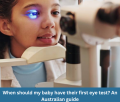
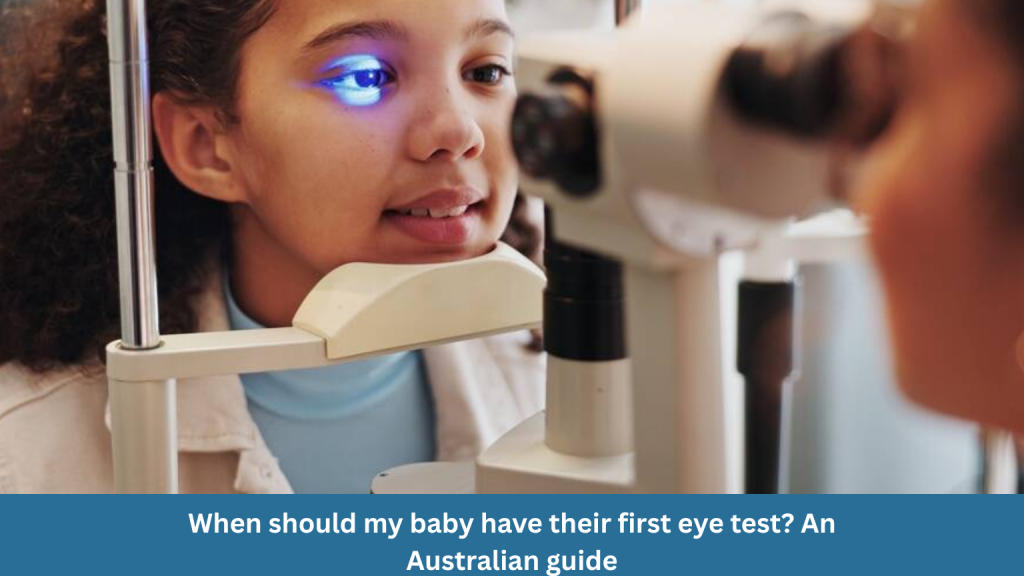
What happens during a baby’s eye test?
A paediatric ophthalmologist may assess:
- Eye alignment and movement.
- Visual responses.
- Focusing ability.
- Eye health using specialised instruments.
- Need for glasses.
- Pupil reactions.
In some cases, eye drops are used to dilate the pupils for a more detailed examination of the retina and internal eye structures.
Which children may need earlier eye assessments?
Some babies and children have a higher risk of developing eye problems and may benefit from earlier specialist review.
This includes children who:
- Were born prematurely.
- Have developmental or neurological conditions.
- Have a family history of childhood eye disease.
- Have noticeable eye misalignment.
- Experienced birth complications.
- Have genetic syndromes associated with eye conditions.
How can parents support healthy vision development?
There are several simple ways parents can support healthy visual development in young children.
Encourage visual interaction
Spend time talking, smiling, and making eye contact with your baby. Visual interaction supports early visual and social development.
Limit excessive screen exposure
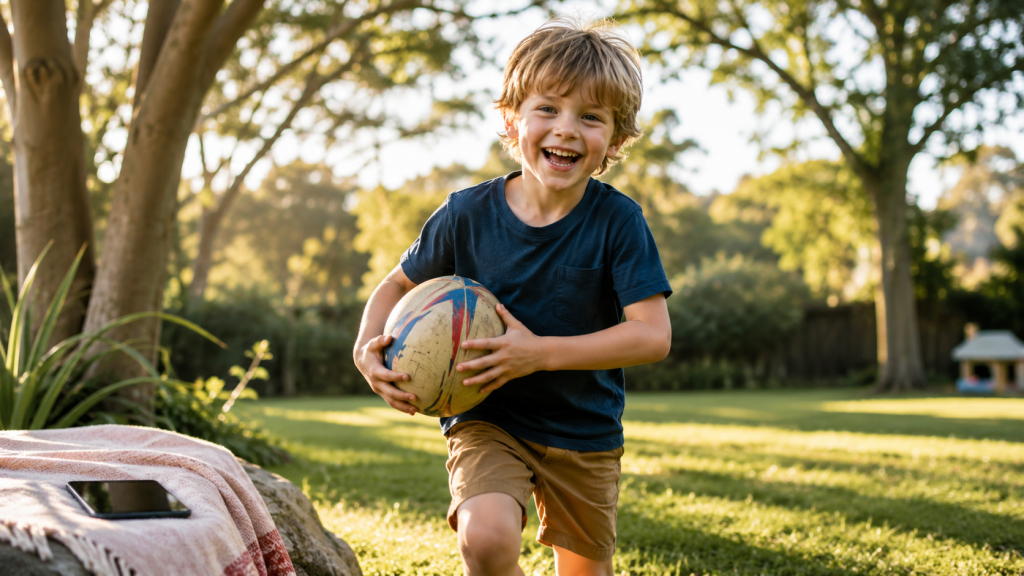
Outdoor play and balanced visual activities are important for children’s eye health. Excessive close-up screen time may contribute to eye strain and myopia progression.
Protect children’s eyes outdoors
Australian sunlight can be harsh, so children should wear appropriate sun protection, including hats and UV-protective sunglasses when age appropriate.
Attend regular health checks
Routine child health assessments can help identify developmental or vision concerns early.
When should parents see a paediatric ophthalmologist?
Parents should arrange an eye assessment if they notice unusual eye appearance, poor visual behaviour, or developmental concerns. Early assessment can provide reassurance or allow timely treatment if needed.
Dr Parth Shah is an experienced Australian ophthalmologist with special interests in paediatric ophthalmology, strabismus, and children’s eye conditions.
Conclusion
Your baby’s vision develops rapidly during the early years of life, making timely eye assessments extremely important. While many babies have healthy visual development, some children may develop eye conditions that are easier to manage when detected early.
Knowing the signs of potential vision problems and arranging appropriate eye examinations can help support your child’s long-term eye health and development.
If you have concerns about your child’s eyes, vision, or visual development, consulting an experienced paediatric eye specialist such as Dr Parth Shah can help ensure your child receives expert care and guidance.
With Dr Parth Shah, families receive personalised care for a wide range of children’s eye conditions, including paediatric eye examinations, strabismus, and vision concerns. Book a consultation today to support your child’s healthy visual development with expert ophthalmology care.
Author Bio
Dr. Parth Shah is a leading ophthalmologist in Canberra, Australia. With extensive training and experience, he is renowned for his expertise in the field. Dr. Shah is dedicated not only to performing successful surgeries but also to patient education. His compassionate approach, combined with technical proficiency, has earned him the trust and gratitude of countless patients. He is a true advocate for eye health and a trusted name in the Canberra ophthalmology community.
FAQs
Yes, some babies are born with eye conditions such as congenital cataracts, glaucoma, or retinal abnormalities. Early detection is important to support healthy visual development and prevent long-term complications.
In the first few months of life, occasional eye crossing can be normal as a baby’s eye muscles continue to develop. However, constant or persistent eye turning should be assessed by a paediatric ophthalmologist.
While occasional video calls or supervised viewing may not cause harm, excessive screen exposure at a very young age may contribute to eye strain and reduced visual interaction with the environment. Outdoor play and face-to-face interaction are important for healthy development.
Yes, Australian UV levels can be very strong. Babies and young children should have appropriate sun protection outdoors, including hats, shade, and UV-protective sunglasses when suitable.
Some eye examinations may be covered under Medicare in Australia when performed by an optometrist or ophthalmologist. Coverage can vary depending on the type of assessment and referral requirements.
Yes, undiagnosed vision problems can sometimes affect reading, concentration, coordination, and classroom performance. Early eye assessments can help identify issues that may impact learning and development.
An optometrist performs routine eye examinations and prescribes glasses, while a paediatric ophthalmologist is a medical doctor specialising in diagnosing and treating complex eye conditions in children, including surgical management when needed.
If there is a family history of childhood eye conditions, siblings will likely also benefit from eye examinations, especially if hereditary conditions are involved.
Yes, babies and young children can wear specially designed glasses if required to support visual development or correct refractive errors.