
Last Updated: 31 January, 2026
Have you ever wondered about how tears are produced and drained?
Tears are produced by the lacrimal gland in the upper outer corner of the eye socket. They wash over the surface of the eye and drain through the upper and lower eyelids into the nose. Babies can be born with a valve or blockage where the tear duct opens into the nose. Tears play a vital role in maintaining the health of the ocular surface, shielding the eye by coating its surface with natural antibiotics, and washing away harmful substances and dust.

Symptoms and Signs of Blocked Tear Duct in Babies
Since blocked tear ducts are a relatively common disorders in infants, the signs and symptoms are well known:
- Discharge from the eyes: either a watery substance or a combination of mucus and dried tears. The severity depends on the location and degree of blockage. Pressure on the inner corners of the lower eyelids may increase the discharge
- Excessive watering of the eyes, also known as epiphora
- Tearing up more than usual in chilly or windy conditions or when the infant has a cold
- More tearing than usual, especially when the child is not crying
- Dried crusting on the eyelashes
Mild redness or irritation of the eyes or eyelids (usually from the child rubbing them)
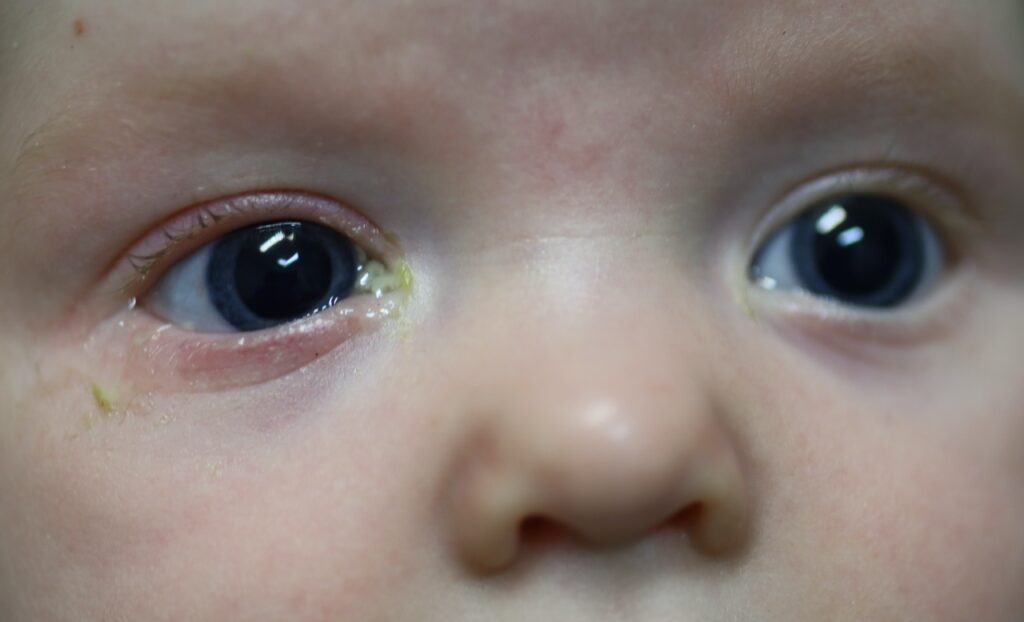
Babies with blocked tear ducts will generally show symptoms between birth and the first twelve weeks of age. A blocked tear duct is usually not uncomfortable for the infant, unless the tear duct gets infected.
An infection can happen when germs grow inside the blocked duct, and the signs of an infected tear duct are:
- Yellow or green mucus discharge
- Eye redness
- A swollen eyelid
Causes of Blocked Tear Duct in Babies
Blocked tear duct in babies are common – the American Academy of Ophthalmology reports that as many as 20% of babies are born with a blocked tear duct, scientifically known as “nasolacrimal duct obstruction”.
The main cause of blocked tear duct in infants is an underdeveloped tear duct:
- The valve at the end of the tear duct in the nose has not opened
- The tear duct is too narrow
- The openings in the eyelids that the tears go through (punctae) are underdeveloped.
- A web of tissue blocking the duct
Less common causes include:
- Infections that may be the cause of swelling in the face
- The nasal bone blocking the drainage pathway that leads into the nose
- Cysts or tumours
- Injury to the tear duct
While this is a fairly common condition in babies, older kids are also occasionally affected by it.
The causes for that might be:
- A cyst or tumour in the nose
- An eye injury
- Nasal polyps (soft, painless growths on the lining of the nasal passages)
Diagnosis of Blocked Tear Duct in Babies
Symptoms and signs are generally present in the first few weeks of life:
- Excessive tearing
- Swelling, soreness or tenderness in areas near the nose
- A swollen pool of tears below the eyes, also known as lacrimal lake
- Crusty eyes or eyelashes after sleeping
- Discharge from the eyes
- A bump near the inner corner of the eye (dacryocoele)
A paediatric ophthalmologist will thoroughly examine the baby to ensure no other conditions responsible for these symptoms. They will also check eye pressure and corneal health in the rare case of infantile glaucoma. In addition to this, they will also look for redness, swelling and irritation of the eyes to rule out conjunctivitis. A painless test using an orange fluorescein dye will help to check the proper movement of the tears through the tear duct.
Treatment of Blocked Tear Duct in Babies
Usually, a blocked tear duct clears up by itself in over 95% of babies by one year of age. The majority of blocked tear ducts resolve without treatment within the first year of the baby’s life, so doctors tend to recommend conservative treatment.
Conservative treatment methods
There are several things that parents can do at home for their newborn or infant with a blocked tear duct.
- Soaking a cloth or cotton ball in warm water and using it to clean the crusty matter and dried discharge from the baby’s eyes. The best way to do this is to wipe the infant’s eye from the inner corner toward the edge of the eye. They are also advised to use a fresh cotton ball or different parts of the cloth for each eye if necessary.
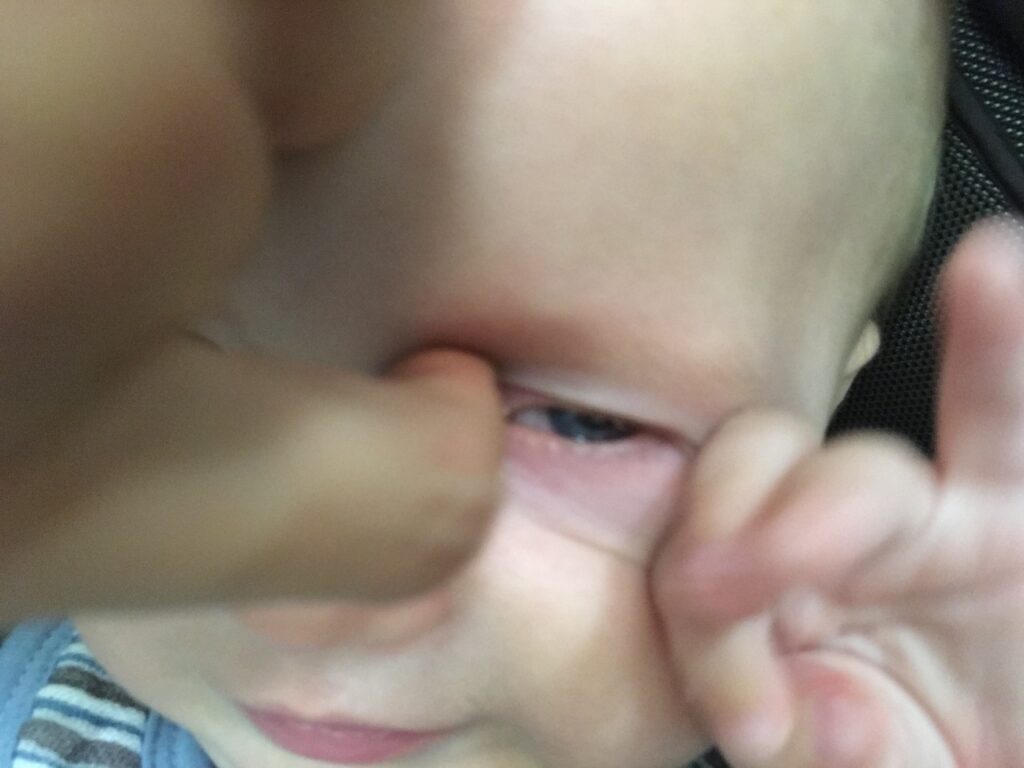
- Many doctors also recommend massage for a blocked tear duct. An ophthalmologist or doctor can teach parents/guardians how to use this procedure on themselves or their child. This treatment may help to open up the tear duct. It is suggested that massaging the ducts using 10 strokes twice a day is the best method to achieve results. The best time to do a blocked tear duct massage for a baby is during a diaper change. The location of massage is critical to success. Most parents massage over the cartilage of the nose, and this is completely unhelpful. The lacrimal sac is under the soft part of the inner corner of the , as shown in this photograph. When done correctly, the massage can be slightly uncomfortable for the baby.
3. Individuals also have the option of placing a hot compress, like a slightly warm, moist washcloth, carefully over the eyes to help relieve the symptoms of a blocked tear duct.
Antibiotics are commonly prescribed and used, but are NOT needed in almost all cases of blocked tear ducts in babies. This is because true infections are extremely rare. The mucus discharge that these babies have is dried up tears, not an infection. Antibiotics may lead to a temporary improvement in symptoms, but will not fix the fundamental, underlying problem of blockage.
Your child’s local doctor or paediatrician will recommend a paediatric ophthalmologist if the tear duct does not open up by itself, or if your child has an infection. The opthalmologist will then perform an eye exam to rule out other problems or underlying causes of these symptoms.
Most blocked tear ducts in infants resolve naturally within the first year. Here’s a general timeline of what parents can expect:
0–3 Months:
- Frequent tearing and mild discharge are common.
- Home care such as warm compresses and gentle massage is recommended.
- Most babies show gradual improvement during this period.
3–6 Months:
- If symptoms persist, continue home care diligently.
- A check-up with your paediatrician or an ophthalmologist may be advised to monitor progress.
6–12 Months:
- Around 90–95% of babies’ tear ducts open naturally by 1 year of age.
- If there is no improvement, or if infections occur, your ophthalmologist may recommend a surgical procedure such as tear duct probing.
Surgical Treatment of Blocked Tear Duct in Babies
In case these home remedies or conservative treatments do not resolve the blocked tear duct, an ophthalmologist can offer a surgical cure for the problem:
1. Probing through the blockage in the tear duct. This is recommended to be done in an operating room under general anaesthesia. The process usually takes around 15 minutes and has a success rate of over 90%. It can be performed at any age, however considering most blocked tear ducts clear up on their own by one year of age, doctors usually advise waiting until 12 months before undertaking the surgery.


The probing surgery may be accompanied by other procedures in certain cases:
- Using a catheter that expands like a balloon to open the tear duct.
- Placing a silicone stent to keep the tear duct open.
- Using nasal endoscopy to remove cysts from the tear ducts.
When to see a doctor?
While most blocked tear ducts resolve on their own within the first year, you may consult your GP or paediatrician if you notice any of the following in your infant:
- Persistent tearing: This occurs if your baby’s eye is consistently watery or tearful for more than one week, even after implementing home care techniques like warm compresses and gentle massage.
- Signs of infection: These include redness, swelling, or crusting around the eye, pus or discharge coming from the eye, or increased fussiness or discomfort in your baby.
- No improvement after several months: If your baby continues to exhibit symptoms after 3-4 months of home care, a doctor can assess the need for further intervention.
- Fever: Although not always present, a fever alongside other symptoms may indicate a more serious condition requiring medical attention.
- Worrisome changes: Any significant change in your baby’s eyes or behaviour, even if not listed above, should prompt a visit to the paediatrician for evaluation.
Remember, early detection and treatment are essential for ensuring your infant’s comfort and preventing any potential complications.
Prevention of Blocked Tear Duct in Babies
There are no preventive measures for blocked tear ducts, especially in babies. A detailed examination by an ophthalmologist may be recommended.
Conclusion
Blocked tear ducts in babies generally tend to resolve themselves. A consultation with your doctor is recommended if your infant is experiencing unusually watery eyes without apparent reason or discharge, or if there are signs of discomfort or infection.
Dr Parth Shah is an ophthalmologist based in Canberra who aims to provide high-quality eye care using modern research and technology for all of his patients, including tear duct surgery for babies.
FAQs
Author Bio
Dr Parth Shah is a leading ophthalmologist in Canberra, with a special interest in paediatric eye surgery. With extensive training and experience, he is renowned for his expertise in the field. Dr Shah is dedicated not only to performing successful surgeries but also to patient education. His compassionate approach, combined with technical proficiency, has earned him the trust and gratitude of countless patients. He is a true advocate for eye health and a trusted name in the Canberra ophthalmology community.