
Last Updated: 29 April, 2025
Uveitis is a potentially debilitating inflammatory condition that affects the uvea, the middle layer of the eye. It is a serious condition that, if not treated promptly and properly, can lead to severe complications such as vision loss, glaucoma, and cataracts. The uvea plays a critical role in supplying blood to the retina and other vital parts of the eye, making inflammation in this area particularly concerning for overall ocular health.
One of the most advanced and effective methods for managing uveitis involves the use of eye injections. This treatment approach has become a cornerstone in the management of severe uveitis due to its targeted delivery of medication directly to the site of inflammation. By injecting corticosteroids or biologic agents into the eye, doctors can provide rapid and localised relief, reducing inflammation and preventing further damage to the eye. In some cases, injections can even help patients avoid the need for systemic treatments, which can have more widespread side effects.
Understanding uveitis
Uveitis is a broad term that encompasses inflammation of various parts of the uvea, which includes the iris, ciliary body, and choroid. It can affect one or both eyes and is often classified based on the affected region:
- Anterior uveitis: Involves the front of the uvea (iris and ciliary body).
- Intermediate uveitis: Affects the vitreous and peripheral retina.
- Posterior uveitis: Involves the back of the eye, including the choroid and retina.
- Panuveitis: Inflammation in all parts of the uvea.
Symptoms of uveitis
Uveitis symptoms can develop rapidly and include:
- Eye redness.
- Pain.
- Blurred vision.
- Sensitivity to light (photophobia).
- Floaters (spots in your vision).
Early diagnosis and treatment are crucial to preventing complications such as glaucoma, cataracts, or permanent vision loss.
Causes of uveitis
While the exact cause of uveitis can vary, common triggers include:
- Autoimmune diseases (e.g., HLAB27 associated uveitis, rheumatoid arthritis, lupus).
- Infections (e.g., herpes, tuberculosis, syphilis).
- Trauma or injury to the eye.
- Idiopathic factors (unknown causes).
Role of eye injections in treating uveitis
Eye injections are a targeted treatment that delivers medication directly to the affected area, ensuring higher drug concentrations with minimal systemic side effects. These injections are particularly useful for moderate to severe cases of uveitis or when other treatments (such as steroid drops) have failed.
Types of eye injections
1. Immunomodulatory injections:
- For patients with autoimmune-related uveitis, biologic agents like adalimumab can modulate the immune response. These are given systemically (not into the eye)
2. Corticosteroid injections:
- These are the most common eye injections for uveitis.
- They reduce inflammation and swelling effectively.
- Examples include triamcinolone acetonide.
3. Anti-VEGF injections:
- Used in some cases where uveitis has led to complications such as macular oedema (swelling in the retina).
- Examples include ranibizumab and bevacizumab.
4. Antibiotic or Antiviral injections:
- Employed for infectious uveitis caused by bacterial or viral pathogens.
5. Sustained-release implants:
- Steroid implants like Ozurdex provide long-term control by releasing medication over several months.
Procedure for eye injections
Eye injections are performed in a sterile environment to prevent infection. The steps typically include:
1. Preparation:
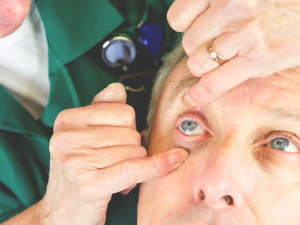
- The eye is numbed using anaesthetic drops.
- An antiseptic solution is applied around the eye and eyelids to reduce the risk of infection.
2. Injection:
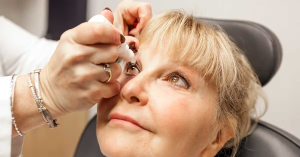
- A fine needle is used to administer the medication into the eye, often into the vitreous (intravitreal injection) or surrounding tissues (sub-Tenon’s injection).
3.Post-Injection Care:
- Patients may experience mild discomfort, which usually subsides quickly.
- Follow-up visits are essential to monitor the response to treatment.
Benefits of eye injections
- Rapid and localised action.
- Reduction in inflammation.
- Reduced risk of vision loss.
- Minimised systemic side effects compared to oral medications.
Risks and Side effects of eye injections
While generally safe, eye injections can carry potential risks, such as:
- Infection (endophthalmitis).
- Increased intraocular pressure and glaucoma.
- Retinal detachment.
- Bleeding or discomfort at the injection site.
Your ophthalmologist will discuss these risks and take precautions to minimise them.
Complementary treatments
In addition to eye injections, managing uveitis may involve:
- Oral corticosteroids or immunosuppressants.
- Eye drops (e.g., steroids and cycloplegic drops)
- Lifestyle modifications to reduce flare-ups (e.g., managing stress and avoiding triggers)
When to seek treatment
If you experience any symptoms of uveitis, prompt consultation with an ophthalmologist is essential. Delaying treatment can result in severe complications, including irreversible vision loss.
Conclusion
Eye injections have revolutionised the treatment of uveitis, offering a precise and effective method to manage this complex and often challenging condition. For patients in Canberra, seeking expert care, local specialists are dedicated to providing personalised treatment plans and guiding individuals through every step of their journey. With a thorough understanding of the condition and advanced treatment options, these specialists ensure that each patient receives the highest standard of care.
Author bio
Dr Parth Shah is a leading ophthalmologist in Canberra, specialising in eye injections. With extensive training and experience, he is renowned for his expertise in the field. Dr Shah is dedicated not only to performing successful surgeries but also to patient education. His compassionate approach, combined with technical proficiency, has earned him the trust and gratitude of countless patients. He is a true advocate for eye health and a trusted name in the Canberra ophthalmology community.
FAQs