Last Updated: 2 September, 2025
Strabismus and amblyopia are two common eye conditions, often occurring together, but they affect the eyes in distinct ways. Understanding the differences, causes, and treatments for these conditions can help patients manage them effectively and ensure better visual outcomes. This blog will provide a comprehensive analysis of both strabismus and amblyopia, exploring their symptoms, causes, diagnosis, and available treatment options.
What is strabismus?
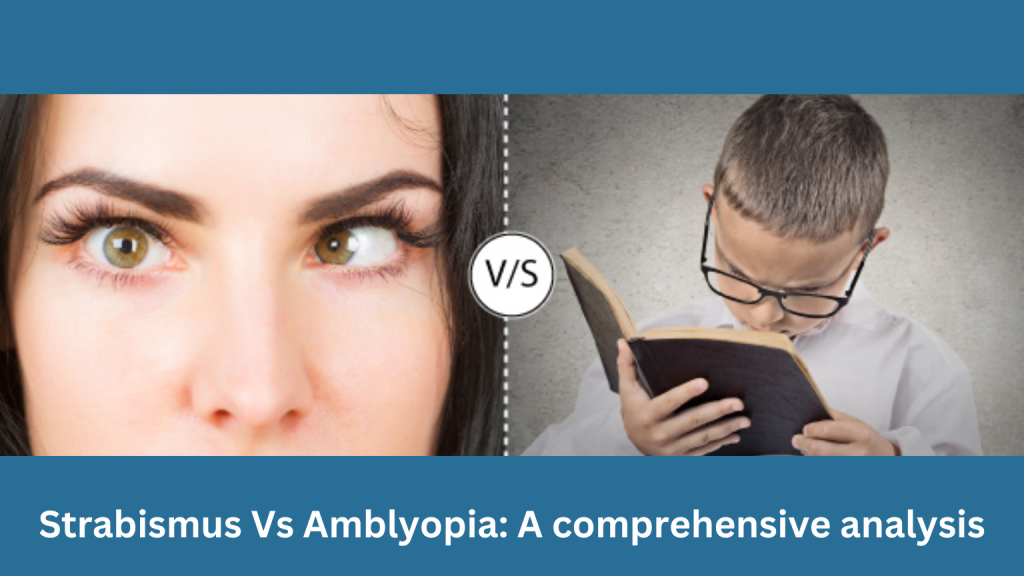
Strabismus, often referred to as “crossed eyes” or “wandering eye,” is a condition where the eyes are not properly aligned with one another. One eye may turn inward, outward, upward, or downward, while the other eye remains focused straight ahead. Strabismus can occur at any age, from infancy to adulthood, and may be constant or intermittent.
Symptoms of strabismus
- One or both eyes may appear to be misaligned.
- Double vision or blurry vision.
- Difficulty focusing on objects or reading.
- Eyes that don’t move together when looking at objects.
- Tilting the head to focus better.
Causes of strabismus
- Genetic factors: A family history of strabismus increases the likelihood of developing the condition.
- Eye muscle weakness: Weakness or imbalances in the muscles controlling eye movement can lead to misalignment.
- Neurological issues: Certain conditions, such as brain tumors, can cause strabismus.
- Refractive errors: Uncorrected vision problems, such as farsightedness, can sometimes lead to strabismus in children.
- Prematurity: Premature babies are at a higher risk of developing strabismus due to underdeveloped eye muscles.
What is amblyopia?
Amblyopia, often known as “lazy eye,” is a visual impairment where one eye fails to develop normal vision, even though the eye itself appears normal. The brain tends to rely more on the stronger eye, and the weaker eye doesn’t receive the appropriate stimulation to develop clear vision. Amblyopia usually develops during childhood and may affect one or both eyes.
Symptoms of amblyopia
- Reduced vision in one eye.
- Difficulty seeing details or reading.
- Squinting or closing one eye to see clearly.
- Eyes that don’t work together well.
Causes of amblyopia

- Strabismus: If the eyes are misaligned (strabismus), the brain may ignore the visual signals from the misaligned eye to avoid double vision, leading to amblyopia.
- Refractive errors: Uncorrected vision problems such as nearsightedness, farsightedness, or astigmatism can cause the brain to favor one eye over the other.
- Obstruction: Conditions like cataracts or ptosis (drooping eyelids) that block light from entering the eye can lead to amblyopia if untreated during the critical years of visual development.
- Genetics: A family history of amblyopia may increase the risk of developing the condition.
Differences between strabismus and Amblyopia
Though strabismus and amblyopia are sometimes linked, they are separate conditions:
- Strabismus is the misalignment of the eyes, while amblyopia is the result of poor vision development in one or both eyes, often due to lack of use.
- Strabismus can cause amblyopia if the brain disregards the misaligned eye to avoid double vision, but not all cases of strabismus lead to amblyopia.
- Strabismus affects eye alignment, while amblyopia affects visual acuity.
- Treatment for strabismus often involves eye exercises, prisms, or surgery, while treatment for amblyopia focuses on strengthening the weaker eye through patching, vision therapy, or corrective lenses.
Diagnosis of strabismus and Amblyopia
- Strabismus diagnosis: A comprehensive eye examination is performed to check for misalignment of the eyes. An ophthalmologist will test eye movements, vision clarity, and may use tests such as the cover-uncover test or the alternate cover test.
- Amblyopia diagnosis: Amblyopia is diagnosed through a visual acuity test, where one eye is covered, and the doctor tests how well the other eye can see. If the vision in one eye is significantly weaker than the other, amblyopia may be diagnosed.
Treatment options for strabismus

- Eye exercises: Strengthening the eye muscles through specific exercises can help improve alignment.
- Glasses or prisms: Corrective lenses can help align the eyes or improve focus.
- Surgery: If other treatments don’t work, surgery may be needed to realign the eye muscles.
- Botox injections: In some cases, botulinum toxin injections can help treat certain types of strabismus by temporarily weakening the stronger eye muscles.
Treatment options for Amblyopia
- Patching: A common treatment involves covering the stronger eye with a patch to force the brain to use the weaker eye, improving its vision.
- Atropine drops: These drops blur the vision in the stronger eye, encouraging the use of the weaker eye.
- Corrective lenses: Glasses or contact lenses can correct refractive errors contributing to amblyopia.
- Vision therapy: Specialized exercises and activities may be prescribed to help improve coordination between both eyes and strengthen the weaker eye.
When should you seek professional help?
It is important to consult an ophthalmologist if:
- Your child has an eye that appears misaligned.
- Your child complains of blurry or double vision.
- Your child has difficulty focusing on objects.
- You notice any other signs of visual impairment.
Conclusion
Strabismus and amblyopia are distinct but often interconnected conditions that can impact visual development if not properly managed. Early diagnosis and treatment are crucial to prevent long-term vision problems. If you or your child are experiencing symptoms, don’t hesitate to consult an ophthalmologist for a comprehensive evaluation. With appropriate intervention, both conditions can be managed, and the visual outcomes can be greatly improved.
Author bio
Dr Parth Shah is a leading ophthalmologist in Canberra, specialising in eye muscle surgery. With extensive training and experience, he is renowned for his expertise in the field. Dr Shah is dedicated not only to performing successful surgeries but also to patient education. His compassionate approach, combined with technical proficiency, has earned him the trust and gratitude of countless patients. He is a true advocate for eye health and a trusted name in the Canberra ophthalmology community.
FAQs