Last Updated: 26 February, 2026
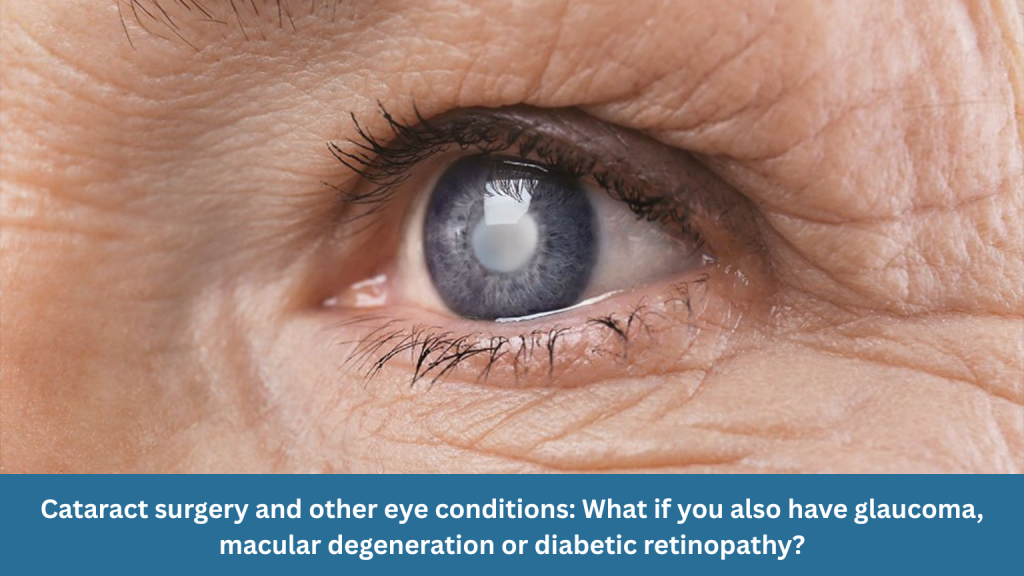
Cataracts are one of the most common causes of vision impairment, particularly with ageing. Cataract surgery is a highly successful procedure that restores clarity of vision by replacing the cloudy natural lens with a clear artificial lens. However, many patients diagnosed with cataracts also have other underlying eye conditions such as glaucoma, age-related macular degeneration (AMD), or diabetic retinopathy.
When cataracts coexist with other eye diseases, surgery requires careful planning, precise timing, and a personalised approach. Understanding how these conditions interact, what to expect from surgery, and how outcomes may differ is essential for protecting long-term vision and eye health.
Below, we explore how cataract surgery is approached when other eye conditions are present, explained in a clear, patient-friendly manner.
Can cataract surgery be performed if you have another eye condition?
Yes, cataract surgery can often be safely performed even if you have glaucoma, macular degeneration, or diabetic retinopathy. However, the presence of these conditions can influence surgical decisions, expected visual outcomes, and post-operative care.
A thorough pre-operative eye examination allows the ophthalmologist to assess the health of the retina, optic nerve, and eye pressure, and to develop a tailored surgical plan. In many cases, cataract removal can actually improve visual function and help with monitoring or managing the underlying condition.
Cataract surgery and glaucoma
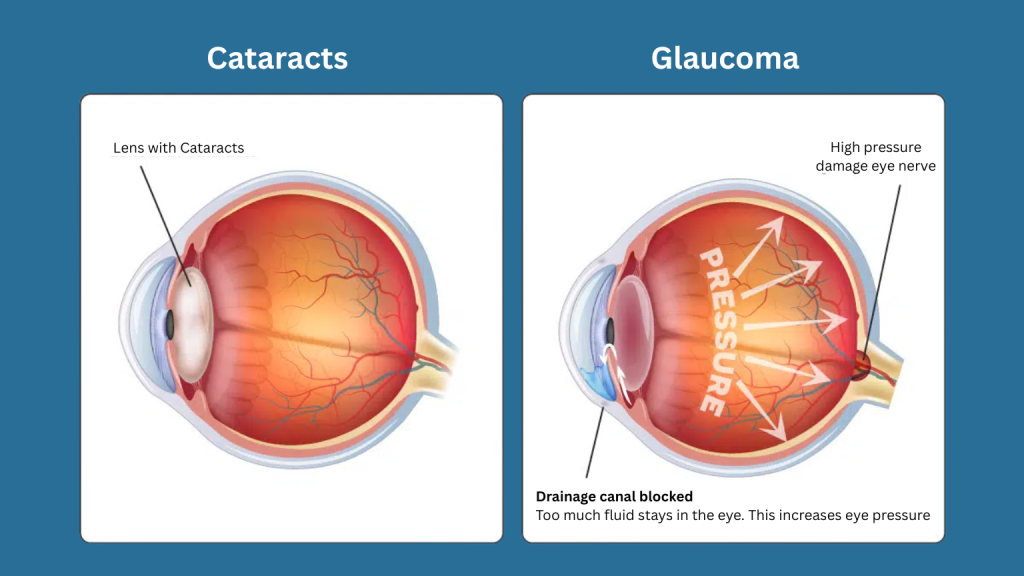
Glaucoma damages the optic nerve and is often associated with raised eye pressure. Many patients with glaucoma also develop cataracts, either due to ageing or as a side effect of long-term eye drop use.
In patients with glaucoma:
- Cataract surgery may lead to a modest reduction in eye pressure, especially in early or moderate glaucoma.
- Surgical planning must minimise pressure spikes during and after surgery.
- Some patients may benefit from combined procedures, such as cataract surgery with minimally invasive glaucoma surgery (MIGS), to reduce reliance on eye drops.
While cataract surgery does not cure glaucoma, it can improve vision and, in some cases, assist with better long-term pressure control.
Cataract surgery and macular degeneration (AMD)
Macular degeneration affects the central retina and can impact reading, recognising faces, and fine visual tasks. Patients with AMD often worry whether cataract surgery is worthwhile.
Key considerations include:
- Cataract surgery does not worsen macular degeneration.
- Visual improvement depends on the severity of macular damage.
- Patients with early or intermediate AMD often experience meaningful improvements in brightness, contrast, and overall visual quality.
Advanced imaging before surgery helps set realistic expectations and guides intraocular lens (IOL) selection to optimise remaining vision.
Cataract surgery and diabetic retinopathy
Diabetic retinopathy affects the blood vessels of the retina and is a common cause of vision loss in people with diabetes. Cataracts may develop earlier and progress faster in diabetic patients.
In these cases:
- Retinal disease should be well-controlled before surgery.
- Cataract surgery can improve vision but may temporarily increase retinal swelling.
- Close coordination between cataract and retinal care is essential.
With careful monitoring and appropriate treatment, most diabetic patients achieve good outcomes and improved quality of life following cataract surgery.
How do coexisting eye conditions affect surgical outcomes?
While cataract surgery is highly successful, visual outcomes depend on the health of other eye structures. Cataract removal improves clarity, but conditions affecting the retina or optic nerve may limit the degree of vision improvement.
Pre-operative counselling is crucial to:
- Set realistic expectations.
- Explain likely visual benefits.
- Discuss the need for ongoing management of the underlying condition.
The goal is always to maximise safe visual improvement while protecting long-term eye health.
Special considerations in surgical planning
When cataracts co-exist with othereye conditions, ophthalmologists may adjust:
- Timing of surgery.
- Choice of intraocular lens.
- Use of combined procedures.
- Post-operative medication and follow-up schedule.
Advanced diagnostics and personalised care plans help ensure the safest possible outcomes.
When should you consult an eye specialist?
You should seek expert ophthalmic evaluation if you:
- Have cataracts and a known diagnosis of glaucoma, AMD, or diabetic retinopathy
- Notice worsening vision despite stable eye disease.
- Experience glare, difficulty reading, or reduced contrast.
- Have diabetes or long-standing eye pressure issues.
- Are unsure whether cataract surgery is suitable for you.
Early assessment allows for optimal timing and tailored treatment.
Conclusion
Having cataracts along with glaucoma, macular degeneration, or diabetic retinopathy does not automatically prevent you from having cataract surgery. With careful assessment, expert planning, and personalised care, cataract surgery can significantly improve visual function and quality of life — even in complex cases.
For expert evaluation, personalised surgical planning, and compassionate care, book an appointment with Dr Parth Shah, a leading ophthalmologist in Canberra with extensive experience managing cataracts alongside complex eye conditions. Dr Parth Shah focuses on evidence-based care and clear communication, helping patients make informed decisions about their vision.
Author bio
Dr Parth Shah is a leading ophthalmologist in Canberra, specialising in cataract surgery. With extensive training and experience, he is renowned for his expertise in the field. Dr Parth Shah is dedicated not only to performing successful surgeries but also to patient education. His compassionate approach, combined with technical proficiency, has earned him the trust and gratitude of countless patients. He is a true advocate for eye health and a trusted name in the Canberra ophthalmology community.