
Last Updated: 2 September, 2025
Strabismus, commonly known as crossed eyes or squint, is a condition where the eyes are misaligned and do not move in coordination. While it is often associated with childhood, strabismus can also develop in adults due to various medical conditions or injuries. Understanding its causes, symptoms, and treatment options is crucial for effective management and improved vision.
What is strabismus?
Strabismus occurs when the eye muscles fail to work together, leading to misalignment. This can result in one eye looking straight while the other turns inward, outward, upward, or downward. In adults, this condition can cause double vision, difficulty in depth perception, and even affect self-confidence. Unlike children, adults do not have the same ability to adapt to strabismus, making early diagnosis and treatment essential.
Symptoms of strabismus in adults
Recognising the symptoms of strabismus early can help in seeking timely treatment. Common symptoms include:

- Double vision (Diplopia) – Seeing two overlapping images instead of one.
- Eye fatigue or strain – Discomfort when focusing on objects for prolonged periods.
- Difficulty in depth perception – Struggles with activities like driving or playing sports.
- Headaches – Continuous eye strain can cause frequent headaches.
- Visible eye misalignment – One eye appearing out of sync with the other.
- Head tilting or turning – A compensatory mechanism to align the image from right and left eyes.
Causes of strabismus in adults

Several factors can lead to the development of strabismus in adults, including:
1. Neurological conditions
Neurological disorders can interfere with the brain’s control over eye movements, leading to strabismus. Common neurological causes include:
- Stroke – A stroke can damage the nerves or brain areas responsible for eye movement, resulting in sudden eye misalignment.
- Brain tumors – Growths in the brain can compress nerves or brain regions that regulate eye muscles.
- Multiple Sclerosis (MS) – MS can affect the optic nerve and eye movement control, leading to strabismus.
- Head injuries – Trauma can damage the nerves controlling the eye muscles, leading to misalignment.
2. Uncorrected vision problems
Refractive errors can also contribute to adult strabismus. These include:
- Hyperopia (Farsightedness) – When the eye struggles to focus, it may overcompensate, leading to an inward eye turn (accommodative esotropia).
- Severe astigmatism or Anisometropia – Unequal focus between the two eyes can lead to strabismus over time.
- Myopia – can lead to stretching of muscles and ‘heavy eye syndrome’.
3. Eye muscle weakness or Paralysis
The six muscles controlling eye movement must work in harmony. Any imbalance due to:
- Trauma to the eye muscles – Can lead to limited eye movement.
- Nerve damage from conditions like diabetes – Diabetes can cause diabetic neuropathy, affecting the nerves that control eye movement.
4. Post-surgical complications
- Strabismus can develop after surgeries like cataract or retinal surgery, due to muscle imbalance.
- Previous eye muscle surgery can lead to consecutive eye misalignment in later life, especially if the original surgery was performed at a yougng age.
5. Thyroid eye disease (Graves’ disease)
- This autoimmune disorder causes inflammation and swelling in the eye muscles, leading to misalignment and bulging eyes.
Risk factors for strabismus in adults
- Family history – A genetic predisposition can increase the risk.
- Uncontrolled diabetes – Can lead to nerve damage affecting eye muscles.
- Neurological disorders – Conditions like MS, stroke, and brain tumors.
- Eye trauma or surgery – Previous eye injuries or operations may contribute.
- Prolonged uncorrected vision issues – Unaddressed refractive errors can strain eye muscles.
Prevention of strabismus in adults
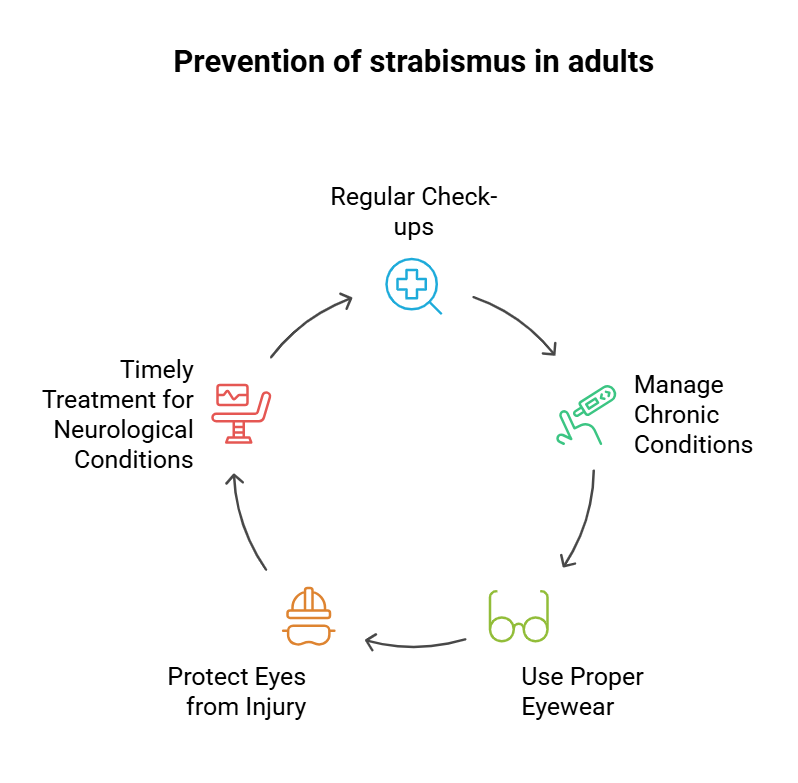
While some causes of strabismus are unavoidable, certain measures may help reduce the risk:
- Regular eye check-ups to detect vision problems early.
- Managing chronic conditions like diabetes to prevent nerve damage.
- Using proper eyewear for refractive errors to reduce eye strain.
- Protecting the eyes from injury, especially in high-risk environments.
- Seeking timely treatment for neurological conditions that may impact eye movements.
Diagnosis of strabismus in adults
A comprehensive eye examination is essential for diagnosing strabismus. The diagnostic process includes:
1. Medical history review
- Assessing past eye conditions, surgeries, or neurological diseases.
2. Visual acuity test
- Checking the clarity of vision in both eyes.
3. Ocular alignment and Movement test
- Evaluating how well the eyes are aligned, and how move in different directions.
4. Neurological assessment
- Assessing potential neurological causes if strabismus is sudden or progressive.
Treatment options for adult strabismus
Fortunately, strabismus in adults is treatable. The choice of treatment depends on the severity and underlying cause of the condition.
1. Prescription glasses or Prisms
- Corrective lenses or prism glasses can help align vision and reduce double vision by bending light before it enters the eye.
2. Botulinum toxin injections
- Botox (Botulinum toxin) is injected into the eye muscles to temporarily correct misalignment by relaxing overactive muscles.
- Effective for patients with mild to moderate misalignment, or those unable to undergo surgery.
3. Surgical treatment: eye muscle surgery
- Strabismus surgery involves adjusting the position or length of eye muscles to improve eye alignment.
- A highly effective procedure, usually performed under general anesthesia.
- Recovery time is generally short, with most patients resuming normal activities within a few days.
4. Treatment of underlying conditions
- If strabismus is caused by an underlying neurological or systemic condition, managing the primary disease is very important.
Why treat strabismus in adults?
Many adults believe that strabismus is only treatable in children, but this is a common misconception.
Treating strabismus can:
- Improve vision and reduce double vision.
- Enhance depth perception, making daily activities like driving safer.
- Boost confidence and social interactions, reducing self-consciousness.
- Reduce eye strain and associated headaches, leading to better overall eye health.
Living with strabismus: Coping strategies
If surgery or immediate treatment is not an option, adults with strabismus can manage their symptoms with:

1. Using an eye patch – Covering one eye can help with double vision.
2. Adjusting lighting – Proper lighting can minimise visual discomfort.
3. Positioning screens at eye level – Reducing strain when working on a computer.
4. Taking frequent breaks – To avoid excessive eye fatigue.
Conclusion
Strabismus in adults is a condition that can significantly impact vision, daily activities, and self-confidence. While it is often associated with childhood, adults can develop strabismus due to neurological conditions, vision problems, muscle weakness, or post-surgical complications. Recognising the symptoms early and seeking appropriate treatment is crucial for managing the condition effectively.
Fortunately, a range of treatment options are available, from prescription glasses and eye exercises to Botox injections and surgical interventions. Addressing the underlying cause of strabismus not only improves eye alignment but also enhances overall quality of life. Schedule a consultation today to explore the best treatment options for your condition.
Author bio
Dr Parth Shah is a leading ophthalmologist in Canberra, specialising in eye muscle surgery. With extensive training and experience, he is renowned for his expertise in the field. Dr Shah is dedicated not only to performing successful surgeries but also to patient education. His compassionate approach, combined with technical proficiency, has earned him the trust and gratitude of countless patients. He is a true advocate for eye health and a trusted name in the Canberra ophthalmology community.
FAQs